whatsapp:+86 13622680352



Gear Reducer for Straightening and Leveling Machine
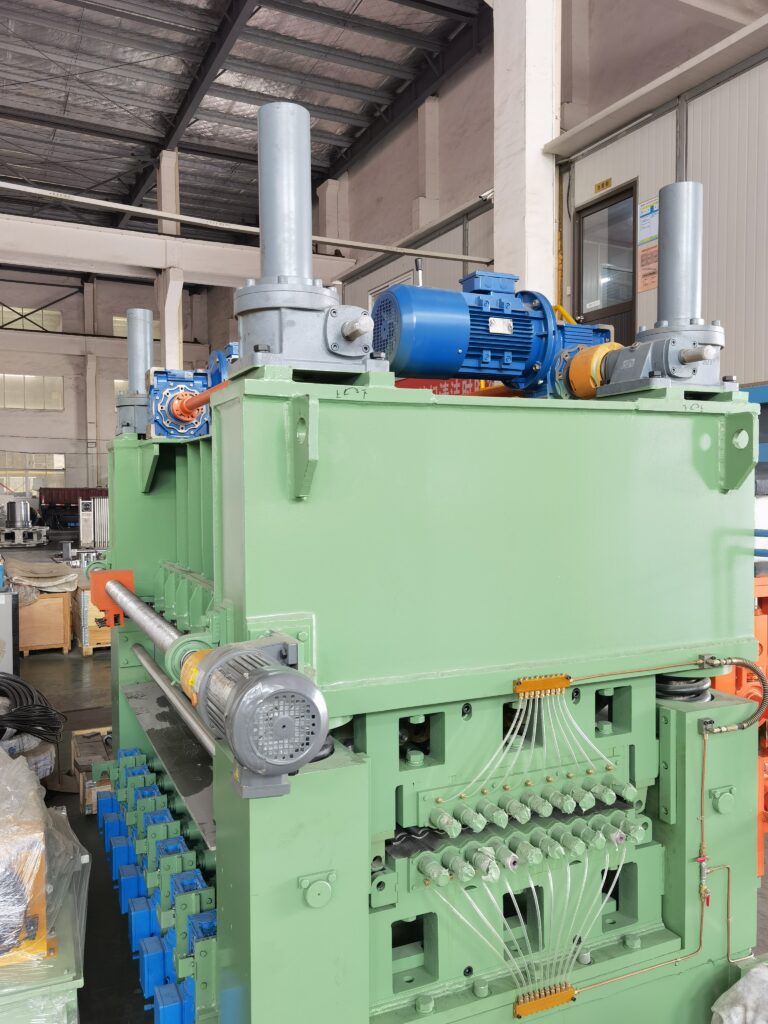
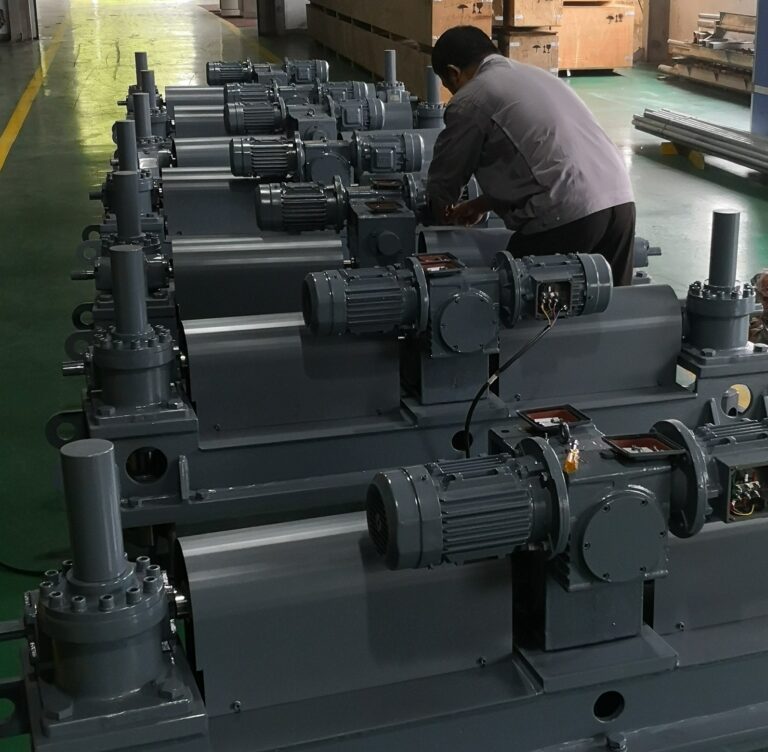
A Gear Reducer for Straightening Machine plays an important role in metal strip, plate, sheet, profile, and coil processing equipment.
Straightening and leveling machines use multiple rollers to correct material defects such as bending, wave, twist, camber, and internal stress. During this process, the material passes through upper and lower roller groups. The rollers apply repeated bending force and gradually improve material flatness.
Therefore, the drive system must provide stable torque, controlled speed, smooth feeding, and reliable long-term operation.
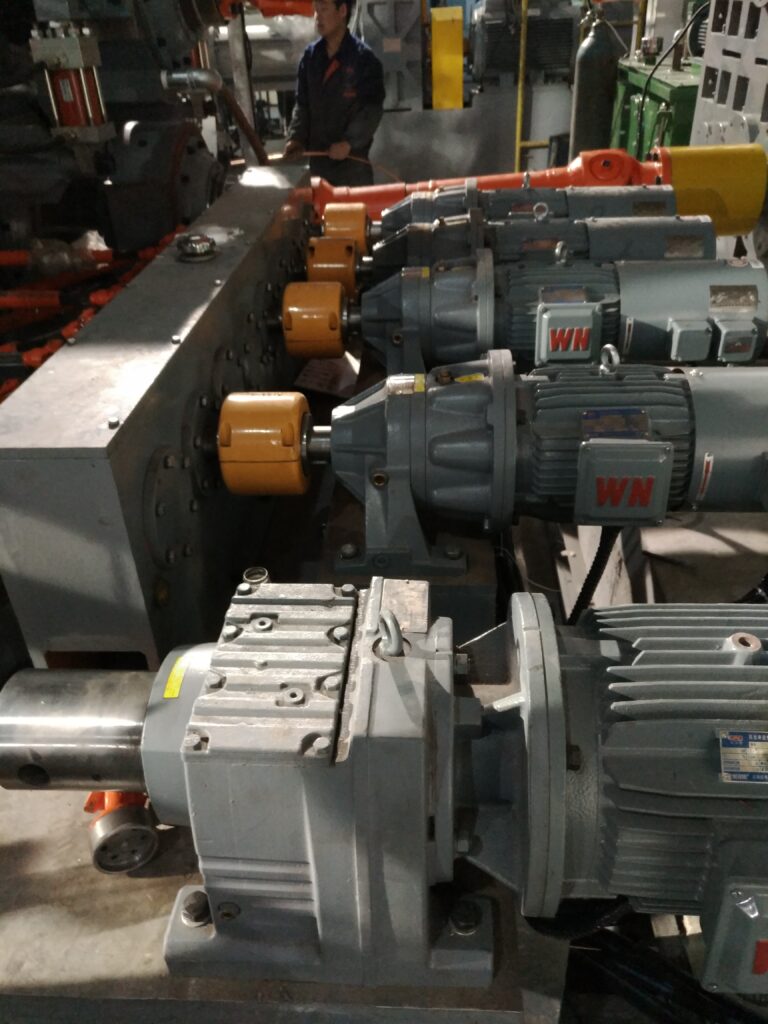
In this type of equipment, motors and gear reducers drive the roller system. The reducer lowers motor speed and increases output torque, so the machine can process metal materials with stable force and consistent movement.
Why Straightening Machines Need Gear Reducers
A straightening machine does not need high-speed rotation only.
It needs strong and stable power.
Metal materials such as steel strip, aluminum plate, stainless steel sheet, copper strip, and metal profiles create high resistance when they pass through the rollers. If the drive system cannot provide enough torque, the machine may experience unstable feeding, material slipping, roller vibration, or poor straightening quality.
A suitable gear reducer helps the machine achieve:
- Low-speed roller rotation
- High output torque
- Smooth start and stop
- Stable material feeding
- Better roller synchronization
- Lower vibration
- Reliable continuous operation
For metal processing equipment, stable transmission directly affects the final product quality.
Common Problems in Straightening and Leveling Equipment
1. Insufficient Torque During Material Feeding
Straightening and leveling machines often process thick, wide, or high-strength materials.
When the material enters the roller section, the system may face high resistance. If the reducer cannot provide enough output torque, the roller may slip or lose stable movement.
This can cause:
- Poor feeding stability
- Surface scratches
- Uneven correction
- Higher motor load
- Gearbox overheating
Solution
Engineers should calculate the required output torque according to:
- Material thickness
- Material width
- Material strength
- Roller diameter
- Number of rollers
- Feeding speed
- Working cycle
- Safety factor
A correct gear reducer selection helps the equipment maintain stable roller force and smoother material movement.
2. Roller Synchronization Problems
Straightening machines usually use many roller groups.
If the roller speed is not consistent, the material may run off track, slip, twist, or become scratched.
In metal processing, even small speed differences can affect feeding accuracy and final flatness.
Solution
The drive system should keep roller rotation stable and coordinated.
Depending on the machine structure, engineers may use:
- Multiple gear motors
- Mechanical transmission shafts
- Couplings
- Chain drive
- Gear transmission
- Electronic speed control
The goal is to keep each roller working in a controlled and stable way.
For related transmission application examples, read:
Gear Motor & Gearbox in Chemical Powder Processing Systems
3. Vibration and Shock Load
Straightening machines often face impact load when material enters the rollers or when thickness changes suddenly.
This may create vibration in the reducer, motor, roller shaft, and machine frame.
Long-term vibration may lead to:
- Gear wear
- Bearing damage
- Loose bolts
- Shaft misalignment
- Higher noise
- Lower correction accuracy
Solution
Engineers should choose a gear reducer with suitable load capacity and service factor.
They should also check:
- Machine frame stiffness
- Roller shaft support
- Coupling alignment
- Gearbox mounting surface
- Bearing strength
- Lubrication condition
A stable mechanical structure helps reduce vibration and extend equipment life.
4. Gearbox Overheating During Continuous Operation
Many straightening and leveling lines run for long working hours.
If the reducer works under overload or poor lubrication, it may generate excessive heat.
Gearbox overheating may come from:
- Wrong reducer size
- High input speed
- Low oil level
- Poor lubricant quality
- Excessive load
- Poor ventilation
- Long duty cycle
Solution
Maintenance teams should check oil level, lubricant condition, reducer temperature, bearing noise, and sealing condition regularly.
In addition, engineers should review the duty cycle during model selection. A reducer used for continuous operation needs enough thermal capacity and proper lubrication design.
For general gearbox maintenance topics, read:
Gearbox Oil Leakage: Causes, Prevention, and Fast Repair Methods
5. Poor Flatness After Processing
Sometimes the machine runs normally, but the material still has waves, bending, or uneven shape after leveling.
This problem may not come from the reducer only. However, unstable transmission can make the problem worse.
Possible causes include:
- Incorrect roller gap
- Uneven roller pressure
- Unstable feeding speed
- Roller wear
- Material strength variation
- Poor speed control
- Insufficient drive torque
Solution
Engineers should check both process settings and transmission performance.
The gearbox should provide stable speed and torque. Meanwhile, the machine should maintain correct roller pressure, roller alignment, and material feeding path.
When mechanical transmission and process adjustment work together, the machine can improve material flatness more effectively.
How to Select a Gear Reducer for Straightening Machine
A correct selection should start from the real working condition, not only motor power.
Output Torque
The reducer must provide enough torque for roller startup and continuous material feeding.
Gear Ratio
The gear ratio determines output speed and torque. For straightening equipment, stable low-speed movement often matters more than high speed.
Service Factor
Straightening machines may face shock load and long working hours. Therefore, engineers should select a proper service factor.
Roller Parameters
Reducer selection should consider roller diameter, roller length, roller quantity, and roller arrangement.
Material Parameters
Material thickness, width, hardness, yield strength, and surface requirements all affect load demand.
Installation Space
The reducer must match the machine layout, shaft direction, and maintenance space.
Lubrication and Sealing
Metal processing workshops may contain dust, oil mist, metal particles, and vibration. Therefore, sealing and lubrication need attention.
Gear Reducer Types Used in Straightening Equipment
Different straightening machines may use different reducer types.
Helical Gear Reducer
A helical gear reducer provides high efficiency, stable transmission, and good load capacity. It suits many continuous roller drive systems.
Bevel Helical Gearbox
A bevel helical gearbox works well when the machine needs right-angle transmission and high torque output.
Worm Gear Reducer
A worm gear reducer can provide a compact structure and large reduction ratio. It works better in low-speed adjustment or auxiliary mechanisms.
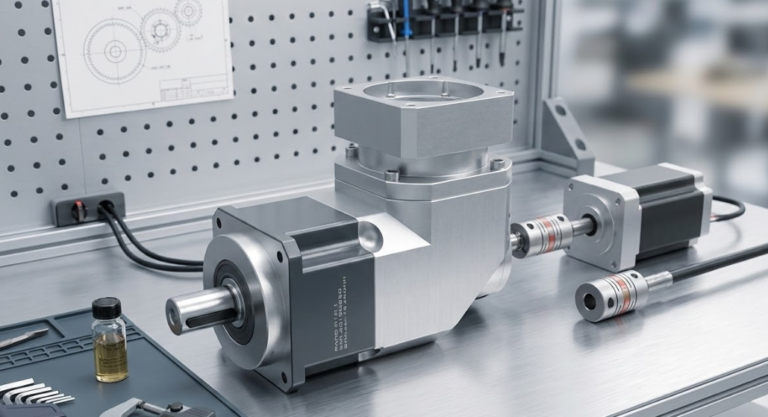
Planetary Gearbox
A planetary gearbox provides compact size, high torque density, and good precision. It suits applications that need compact layout and higher positioning accuracy.
The best choice depends on load, speed, space, cost, accuracy, and duty cycle.
Why Stable Transmission Matters in Metal Processing
Straightening and leveling are not only mechanical correction processes.
They are also quality control processes.
Stable transmission helps improve:
- Feeding consistency
- Surface quality
- Material flatness
- Roller life
- Production efficiency
- Equipment reliability
If the roller drive system is unstable, the final product may show waves, scratches, bending, or poor dimensional quality.
Therefore, a gear reducer is not just a power transmission part. It supports the whole metal processing result.
For broader metal forming and processing information, users can refer to:
ASM International
The Fabricator
For general machinery safety principles, engineers can refer to:
ISO 12100 Safety of Machinery
Related Applications
The same transmission logic applies to many metal processing machines, including:
- Steel strip straightening machines
- Plate leveling machines
- Aluminum sheet leveling equipment
- Copper strip processing lines
- Stainless steel coil processing equipment
- Roll forming machines
- Cut-to-length lines
- Coil feeding systems
- Metal profile straightening equipment
Related internal reading:
NUODUN Products
Gearbox Oil Leakage: Causes, Prevention, and Fast Repair Methods
Gear Motor & Gearbox in Chemical Powder Processing Systems
Conclusion
A Gear Reducer for Straightening Machine helps metal processing equipment achieve stable roller drive, high torque output, smooth feeding, and reliable continuous operation.
In straightening and leveling equipment, common challenges include high feeding resistance, roller synchronization, shock load, vibration, gearbox overheating, and poor material flatness.
By selecting the correct reducer type, torque capacity, gear ratio, service factor, and lubrication design, engineers can improve equipment stability and final product quality.
In metal processing, good transmission design does more than rotate rollers.
It supports flatness, surface quality, production reliability, and long-term machine performance.