whatsapp:+86 13622680352



Gear Reducer for Metal Slitting Machine
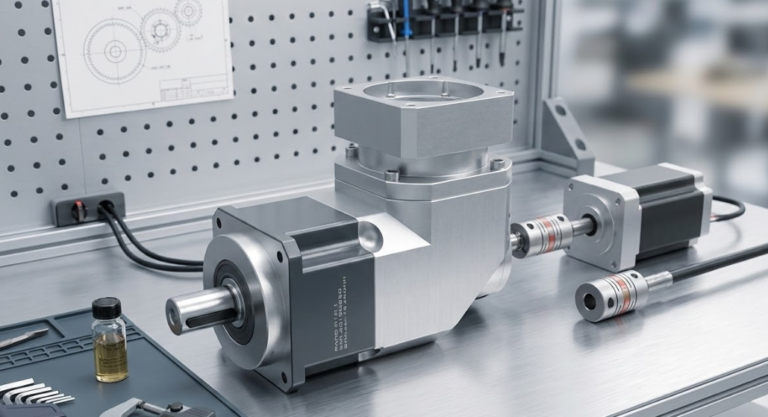
A Gear Reducer for Metal Slitting Machine provides the low-speed, high-torque drive needed for stable coil processing.
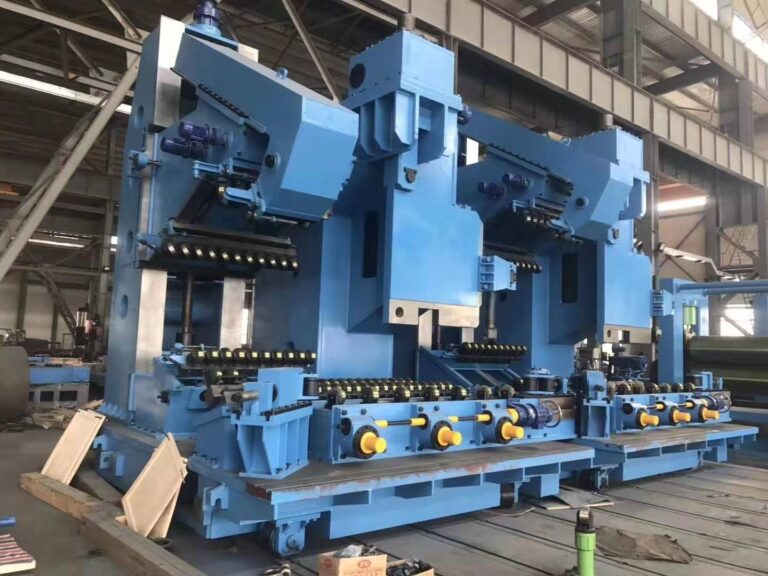
Metal slitting machines cut wide coils into narrower strips. Depending on the production line, they may process carbon steel, stainless steel, aluminum, copper, or other metal coils.
During slitting, the machine must keep the cutter shafts rotating smoothly while the strip moves through the line at a controlled speed. Therefore, the drive system must handle high torque, continuous operation, changing coil conditions, and strict cutting accuracy.
A stable reducer and motor combination helps the machine maintain consistent shaft speed and better strip movement.
Why Metal Slitting Machines Need Gear Reducers
The electric motor usually runs faster than the cutter shaft needs.
Therefore, the gear reducer performs two important tasks:
- Reduces motor speed
- Increases output torque
This allows the slitting machine to drive heavy cutter shafts and rollers without sudden speed changes.
In addition, a proper gear ratio helps the machine start more smoothly and reduces shock on shafts, couplings, bearings, and knives.
A suitable transmission system helps improve:
- Cutter shaft stability
- Strip feeding consistency
- Cutting accuracy
- Surface quality
- Equipment reliability
Common Problems in Metal Slitting Machine Drive Systems
1. Insufficient Cutter Shaft Torque
Thick, wide, or high-strength metal strips require more torque during slitting.
If the reducer has insufficient output torque, the machine may experience:
- Speed drop
- Motor overload
- Cutter vibration
- Poor cutting quality
- Higher gearbox temperature
Solution
Engineers should select the reducer according to the real cutting load.
Important inputs include:
- Material type
- Material thickness
- Coil width
- Number of strips
- Cutter shaft diameter
- Line speed
- Starting torque
- Duty cycle
Therefore, reducer selection should start from the process load, not only the motor power.
2. Knife Gap and Overlap Errors
Slitting quality depends strongly on the position of the rotary knives.
If the knife gap or overlap is incorrect, the strip may show:
- Excessive burr
- Poor edge quality
- Width error
- Strip deformation
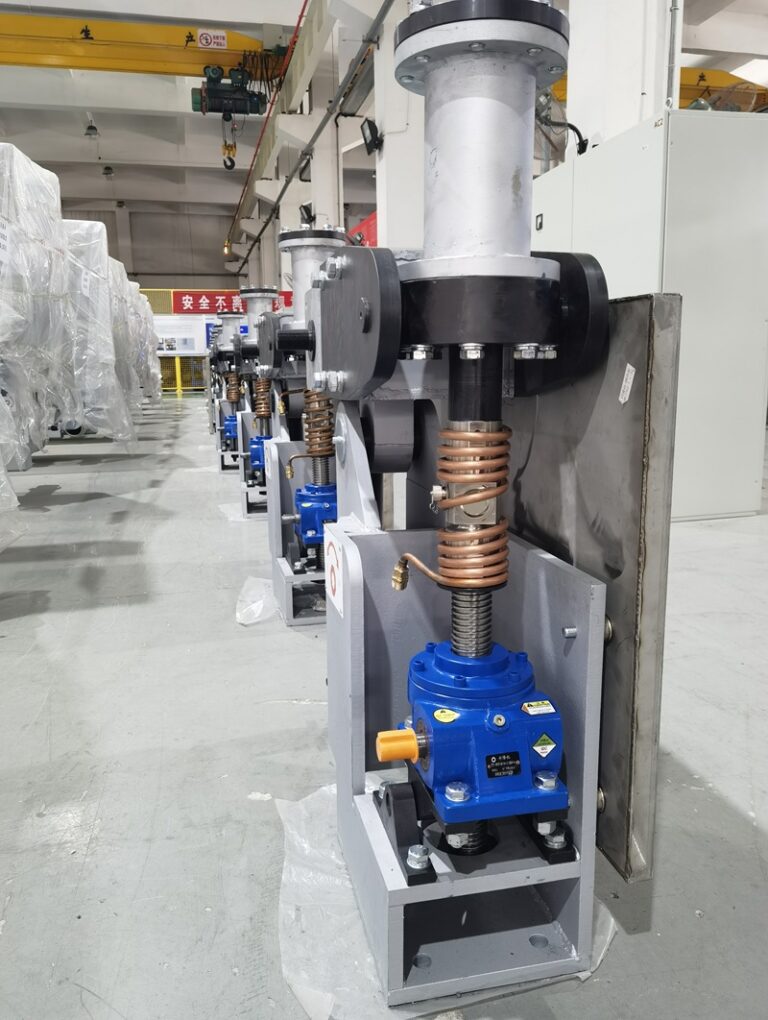
In some slitting machines, engineers use screw jacks or other mechanical adjustment systems to move the cutter head, upper frame, or related tooling structure.
Solution
The adjustment system should provide stable and repeatable positioning.
Engineers should check:
- Adjustment stroke
- Screw backlash
- Guide accuracy
- Limit position
- Mechanical stiffness
However, the adjustment mechanism should mainly control position. The machine frame and cutter shaft structure should carry the main cutting forces.
For screw jack selection logic, see the Screw Jack Selection Guide.
3. Strip Speed and Tension Fluctuation
A slitting line usually includes several sections, such as:
- Uncoiler
- Slitter
- Tension unit
- Recoiler
These sections must work together.
If the cutter shaft speed changes suddenly, strip tension may also change. As a result, the material may vibrate, run off track, scratch, or rewind poorly.
Solution
The drive system needs stable reducer output and smooth motor control.
Engineers should also coordinate:
- Motor speed
- Reducer ratio
- Line speed
- Recoiler torque
- Tension control
Therefore, the gearbox is one part of a complete strip-control system.
Gear Reducer Selection for Metal Slitting Machines
A Gear Reducer for Metal Slitting Machine should match the complete working condition.
Output Torque
The reducer must provide enough torque during normal cutting and startup.
In addition, engineers should allow margin for thicker material, harder grades, and load changes.
Gear Ratio
The ratio determines cutter shaft speed.
A correct ratio helps maintain stable line speed while keeping the motor in a suitable operating range.
Service Factor
Slitting machines often run for long production cycles.
Therefore, engineers should consider:
- Continuous operation
- Frequent starts
- Shock load
- Material variation
A suitable service factor helps improve reducer life.
Gearbox Type
Depending on the machine layout, engineers may choose:
- Helical gear reducer
- Bevel helical gearbox
- Parallel shaft gearbox
- Worm gearbox for auxiliary adjustment
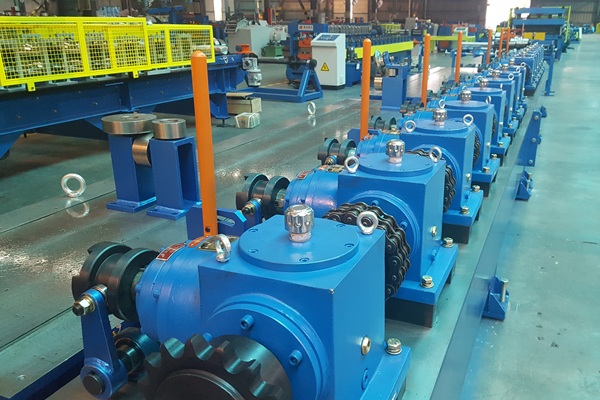
For the main cutter shaft, high-efficiency helical or bevel-helical designs often make more sense when the machine needs continuous torque transmission.
Why Cutter Shaft Stability Matters
The slitting process depends on stable rotary knife movement.
If the drive system creates excessive backlash, vibration, or speed fluctuation, cutting quality may suffer.
Possible results include:
- Larger burrs
- Edge tearing
- Uneven strip width
- Knife wear
- Bearing wear
- Higher vibration
Therefore, engineers should evaluate the full transmission chain:
Motor → Gear Reducer → Coupling → Cutter Shaft → Knife System
Each component affects final cutting performance.
Screw Jack Adjustment in Slitting Equipment
Some slitting machines use screw jacks for structural adjustment.
For example, a screw jack may adjust:
- Upper cutter structure
- Tooling height
- Roller position
- Maintenance position
- Frame alignment
A screw jack offers stable low-speed adjustment and strong vertical support.
However, engineers should avoid using the screw jack as the main guide.
Instead, guide rails, columns, or the machine frame should handle side loads.
This reduces screw wear and improves positioning accuracy.
For multi-point systems, see How to Size a Multi-Point Screw Jack Lifting System.
Problem: Gearbox Overheating During Continuous Slitting
Metal slitting lines may run for many hours.
Therefore, gearbox temperature becomes an important maintenance indicator.
Common causes of overheating include:
- Overload
- Incorrect gear ratio
- Poor lubrication
- Low oil level
- Bearing problems
- Poor ventilation
- Misalignment
Solution
Maintenance teams should regularly check:
- Oil level
- Oil condition
- Reducer temperature
- Bearing noise
- Seal condition
- Coupling alignment
If the reducer also shows oil leakage, the problem should be corrected early.
Related internal reading: Gearbox Oil Leakage: Causes, Prevention, and Fast Repair Methods.
Problem: Vibration and Shock Load
A slitting machine may experience shock when:
- Thick material enters the cutter
- Line speed changes
- A coil starts or stops
- Cutter setup is incorrect
Long-term vibration can damage bearings, couplings, gear teeth, and mounting bolts.
Solution
Engineers should check:
- Reducer service factor
- Coupling alignment
- Machine base stiffness
- Cutter shaft support
- Bearing condition
- Acceleration settings
In addition, smooth motor acceleration can reduce unnecessary mechanical shock.
Metal Slitting Machine Safety
Metal slitting equipment contains sharp rotary knives, moving coils, rollers, and power-transmission parts.
Therefore, guarding and safe maintenance procedures are critical.
OSHA specifically identifies slitter blades, nip points, rollers, and power-transmission parts as major hazards in slitting equipment. It recommends suitable guards, interlocks, sensing devices, safe work procedures, and operator training.
For general machinery design, ISO 12100 provides principles for risk assessment and risk reduction throughout the machine life cycle.
These safety measures should work together with:
- Emergency stop
- Interlocked guards
- Knife-area protection
- Lockout procedures
- Overload protection
- Safe maintenance access
How to Improve Metal Slitting Machine Reliability
A reliable slitting line needs more than a strong gearbox.
Engineers should review:
- Motor size
- Reducer ratio
- Cutter shaft torque
- Coupling alignment
- Bearing capacity
- Knife condition
- Strip tension
- Lubrication
- Frame stiffness
- Adjustment accuracy
In addition, preventive maintenance helps identify small problems before they affect cutting quality.
A gearbox with stable temperature, correct lubrication, and proper alignment will usually provide more reliable long-term performance.
Related Applications
The same transmission principles also apply to:
- Cut-to-length lines
- Coil processing equipment
- Steel strip processing lines
- Aluminum slitting machines
- Stainless steel coil lines
- Recoiling machines
- Roller processing equipment
- Metal sheet production lines
Related internal reading:
Screw Jack Selection Guide
How to Size a Multi-Point Screw Jack Lifting System
Gearbox Oil Leakage Guide
NUODUN Products
Conclusion
A Gear Reducer for Metal Slitting Machine must provide stable torque, controlled speed, and reliable continuous operation.
The main engineering challenges include cutter shaft torque, strip tension, knife positioning, vibration, gearbox temperature, and long duty cycles.
Therefore, engineers should evaluate the complete drive system instead of selecting the reducer only by motor power.
A stable transmission system helps improve:
- Cutting accuracy
- Edge quality
- Strip stability
- Knife life
- Equipment reliability
In a metal slitting line, the gearbox does more than drive the cutter shaft.
It supports the consistency of the whole cutting process.