whatsapp:+86 13622680352



Lifting System for High-Frequency Heat Treatment Equipment
A Lifting System for Heat Treatment Equipment plays an important role in high-frequency induction heating machines, heat treatment furnaces, quenching systems, and vertical processing equipment.
High-frequency heat treatment equipment uses electromagnetic induction to heat metal parts quickly and accurately. During this process, the workpiece, heating coil, tooling, or platform may need controlled vertical movement. Therefore, the lifting system must provide stable motion, accurate positioning, and reliable support under repeated working cycles.
In this type of equipment, engineers often use a combination of:
- Screw jack or lifting actuator
- Steering gearbox or bevel gearbox
- Motor drive system
- Couplings
- Shafts
- Control system
This combination helps the machine achieve smooth lifting, stable positioning, and better process repeatability.
What Does the Lifting System Do in Heat Treatment Equipment?
The lifting system mainly controls vertical movement.
Depending on the machine design, it may move:
- Workpiece fixture
- Heating coil position
- Quenching structure
- Support platform
- Furnace cover
- Tooling mechanism
In high-frequency heat treatment, position control matters because heating distance, heating time, and workpiece alignment can affect the final hardening quality.
If the lifting movement is unstable, the equipment may face:
- Uneven heating
- Poor repeatability
- Mechanical vibration
- Tooling misalignment
- Reduced process stability
Therefore, the lifting system is not just a mechanical accessory. It directly supports heat treatment quality.
Why Use a Steering Gearbox in High-Frequency Heat Treatment Equipment?
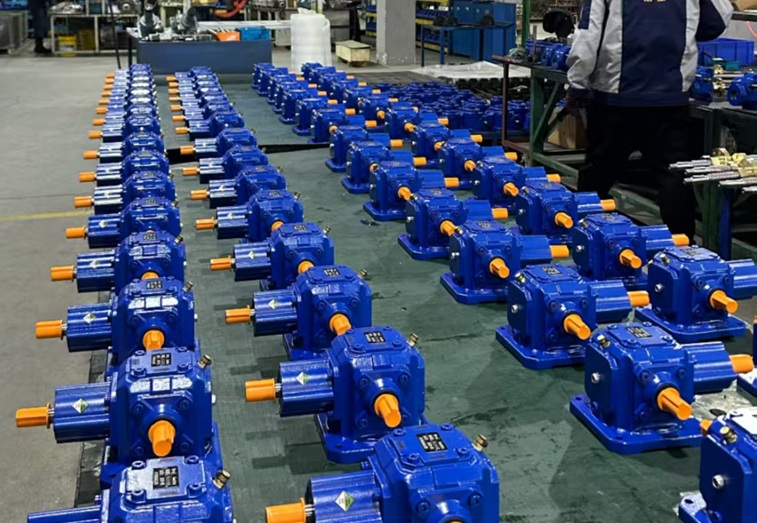
A steering gearbox, also called a bevel gearbox or right-angle gearbox, changes the direction of power transmission.
In vertical heat treatment equipment, machine space is often limited. The motor may not align directly with the lifting mechanism. Therefore, engineers use a steering gearbox to transfer torque to the correct direction.
A steering gearbox helps the system achieve:
- Compact machine layout
- Direction change of power transmission
- Better shaft arrangement
- Multi-point motion distribution
- More flexible equipment design
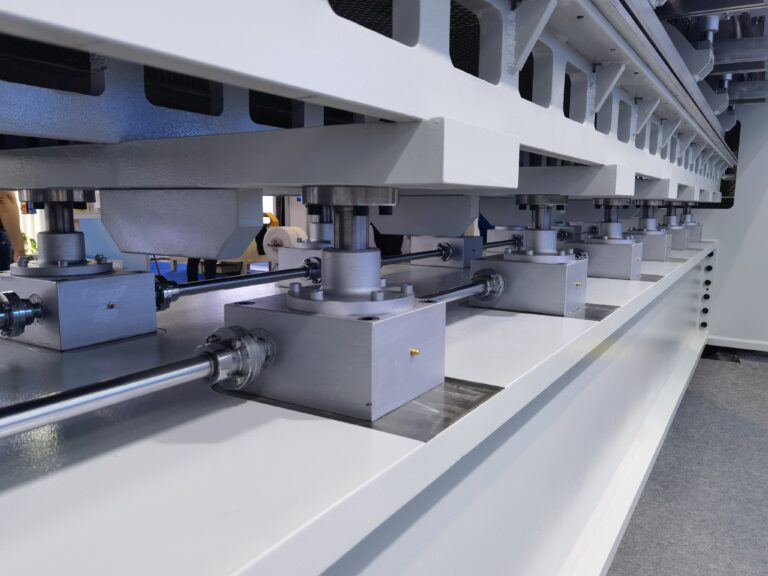
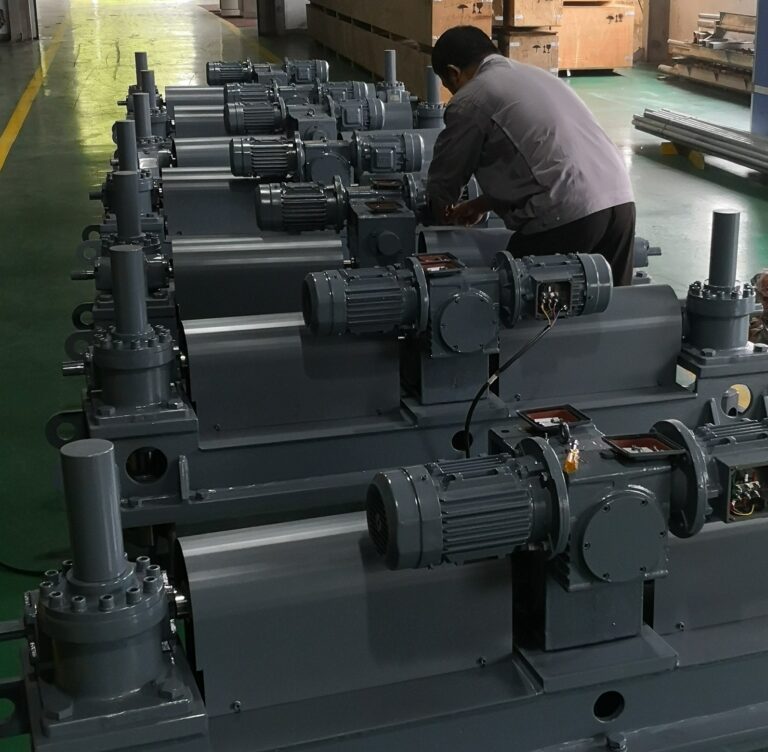
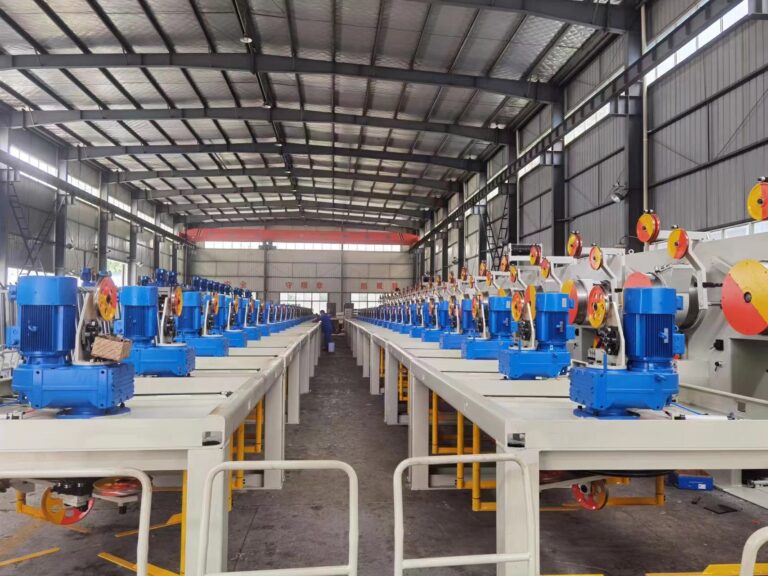
In some machines, one motor can drive several lifting points through shafts and steering gearboxes. As a result, the lifting motion becomes more synchronized and stable.
For similar multi-point lifting design logic, read:
How to Size a Multi-Point Screw Jack Lifting System
Motor Drive System: Servo Motor, Brushless Motor, or AC Motor?
The motor drive system provides power for the lifting mechanism.
In heat treatment equipment, engineers may use different motor types according to control requirements.
AC Motor
An AC motor works well for simple lifting movement when the system does not require high positioning accuracy.
Servo Motor
A servo motor provides better speed control and position feedback. Therefore, it suits equipment that needs accurate movement and repeatable positioning.
Brushless Motor
A brushless motor can provide stable operation, compact size, and good control performance. However, engineers should confirm the real system design before specifying this motor type.
Because of this, the safer engineering description is motor drive system, unless the equipment drawing or nameplate clearly confirms the motor type.
Common Problems in Heat Treatment Equipment Lifting Systems
1. Unstable Vertical Movement
High-frequency heat treatment equipment often needs repeated lifting and lowering.
If the lifting system moves unevenly, the heating coil or workpiece may not stay in the correct position.
This may cause:
- Uneven heat treatment depth
- Poor surface hardening quality
- Workpiece deformation risk
- Lower process consistency
Solution
Engineers should check:
- Screw jack model
- Lifting stroke
- Guide structure
- Motor control method
- Shaft alignment
- Gearbox ratio
A stable lifting structure helps maintain repeatable movement during each heating cycle.
2. High-Temperature Working Environment
Heat treatment equipment works near high-temperature zones.
Even if the transmission parts do not directly enter the heating area, they may still face:
- Radiant heat
- Oil aging
- Seal hardening
- Thermal expansion
- Dust or oxide scale
Solution
The design should consider:
- Proper installation distance from heat source
- Heat-resistant lubrication
- Suitable sealing structure
- Protective covers
- Regular maintenance access
In addition, engineers should avoid placing sensitive transmission components too close to the heating zone.
For general machinery safety and risk reduction principles, engineers can refer to:
ISO 12100 Safety of Machinery
3. Poor Synchronization in Multi-Point Lifting
Some heat treatment machines use large platforms or heavy tooling structures.
If multiple lifting points do not move together, the platform may tilt.
This can create:
- Frame stress
- Tooling misalignment
- Higher screw wear
- Positioning error
- Equipment vibration
Solution
A mechanical synchronization system can use:
- Screw jacks
- Steering gearboxes
- Connecting shafts
- Couplings
- One motor drive
- Limit switches
This structure allows multiple lifting points to move together. Therefore, the platform remains more stable during operation.
For general screw jack selection logic, read:
Screw Jack Selection Guide
4. Overload and Wrong Model Selection
A lifting system may fail early if engineers select the model only by rated load.
Heat treatment equipment may create extra load because of:
- Heavy workpieces
- Tooling weight
- Dynamic movement
- Starting torque
- Thermal deformation
- Safety factor requirements
Solution
Before selecting the lifting system, engineers should confirm:
- Maximum working load
- Stroke length
- Lifting speed
- Duty cycle
- Starts per hour
- Working temperature
- Installation space
- Required accuracy
- Safety factor
Correct selection helps reduce overheating, wear, vibration, and unexpected downtime.
5. Lubrication and Maintenance Problems
Screw jacks and gearboxes need proper lubrication.
In heat treatment workshops, lubrication may degrade faster because of heat, dust, and long operating cycles.
Poor lubrication can lead to:
- Higher friction
- Increased temperature
- Gear wear
- Screw wear
- Noise
- Reduced service life
Solution
Maintenance teams should check:
- Lubricant condition
- Oil level
- Grease condition
- Seal condition
- Abnormal noise
- Surface temperature
- Shaft and coupling condition
Regular inspection helps users find small problems before they become major failures.
How to Select a Lifting System for Heat Treatment Equipment
A good selection starts from the real process requirement.
Load Capacity
The system must handle the workpiece, tooling, platform, and dynamic load.
Stroke Length
The lifting stroke must match the required process position.
Lifting Speed
High-frequency heat treatment usually needs controlled movement, not excessive speed.
Position Accuracy
If heating distance affects process quality, engineers should use better motor control and feedback.
Duty Cycle
Repeated heating cycles require checking thermal performance and lubrication.
Working Environment
Heat, dust, humidity, and maintenance conditions affect gearbox and screw jack life.
Safety Design
Limit switches, emergency stop, overload protection, and mechanical holding should be considered during design.
Why Stable Motion Matters in High-Frequency Heat Treatment
In heat treatment equipment, motion control affects process quality.
Stable lifting helps maintain:
- Correct heating distance
- Repeatable workpiece position
- Smooth process movement
- Lower vibration
- Better equipment reliability
Therefore, the transmission system should not only provide force. It should also support process stability.
For broader technical background on induction heating, users can refer to professional resources from organizations such as ASM International and Inductoheat.
Related Applications
The same lifting and transmission logic also applies to:
- Induction hardening machines
- Vertical quenching equipment
- Heat treatment furnaces
- Metallurgical equipment
- Heavy workpiece positioning systems
- Furnace cover lifting systems
- Industrial automation equipment
Related internal reading:
Screw Jack Selection Guide
Multi-Point Screw Jack Lifting System
NUODUN Products
Conclusion
A Lifting System for Heat Treatment Equipment helps high-frequency heat treatment machines achieve stable vertical movement, accurate positioning, and reliable repeated operation.
In this application, screw jacks or lifting actuators provide lifting force, steering gearboxes change the transmission direction, and motor drive systems control movement.
The main engineering challenges include high temperature, repeated cycles, synchronization, lubrication, overload, and positioning accuracy.
By selecting the correct lifting structure and transmission system, engineers can improve process stability, reduce downtime, and support consistent heat treatment quality.