whatsapp:+86 13622680352


Worm Screw Jack Lifting System: How to Select the Right Screw Jack for Heavy-Duty Industrial Applications
Introduction
A worm screw jack lifting system gives heavy-duty machines a stable and reliable way to lift, lower, push, pull, or position a load. Engineers use this system in lifting platforms, production lines, steel plants, packaging machines, maintenance platforms, and automation equipment.
Unlike hydraulic or pneumatic systems, a worm screw jack lifting system uses mechanical power to create linear motion. Therefore, users choose it when they need stable movement, accurate height control, compact design, and long service life.
At NUODUN Drive, we provide screw jacks, gear reducers, bevel gearboxes, motors, and custom drive systems for global industrial equipment manufacturers.
What Is a Worm Screw Jack Lifting System?
A worm screw jack lifting system usually includes a screw jack, motor, coupling, connecting shaft, bevel gearbox, limit switch, and control system.
The working principle is simple. First, the motor drives the worm shaft. Then, the worm shaft drives the worm wheel. After that, the worm wheel moves the screw or nut. As a result, rotary motion becomes linear lifting motion.
In different designs, the screw may move up and down, or the nut may move along a fixed screw. Because of this, engineers use worm screw jacks for lifting, positioning, clamping, tilting, leveling, and height adjustment.
NUODUN provides several screw jack products, including SWL Worm Gear Screw Jacks, HK Worm Gear Screw Jacks, and NDJ Worm Gear Screw Jack.
Why Screw Jack Selection Is Not Only About Rated Load
Many users start selection by asking one question: “How many tons can this screw jack lift?”
This question matters. However, it is not enough.
Engineers must match the worm screw jack lifting system with the real working condition. Therefore, they should check more than the rated load.
Before users choose a model, they should confirm:
- Total working load
- Number of lifting points
- Center of gravity
- Uneven load
- Stroke length
- Lifting speed
- Duty cycle
- Starts per hour
- Guided or unguided load
- Screw buckling risk
- Work environment
- Safety factor
- Motor power
- Control method
In addition, users should think about future maintenance. Users can reduce downtime when they choose a screw jack that allows easy inspection and lubrication.
For more details, you can read NUODUN’s Screw Jack Selection Guide.
How to Calculate the Load Per Screw Jack
For a single screw jack system, engineers start selection from the maximum working load. Then, they add a suitable safety factor.
Engineers use a different method for a multi-point screw jack lifting system. Many users simply divide the total load by the number of screw jacks. However, this method may create risk.
In real equipment, the equipment rarely places the same load on every lifting point. For example, the center of gravity may move to one side. Also, the frame may bend slightly during lifting. As a result, one screw jack may carry more load than the others.
A simple starting formula is:
Required capacity per jack = Total working load ÷ Number of lifting points × Uneven-load factor × Safety factor
For example, if a platform weighs 20 tons and uses four screw jacks, the basic load per jack is 5 tons. However, engineers should not select a 5-ton screw jack directly. They should also add an uneven-load factor and a safety factor.
Therefore, the final selected capacity may need to be higher than 5 tons per jack.
For heavy-duty systems, engineers should size the system based on the most heavily loaded lifting point, not only the average load. NUODUN also explains this topic in How to Size a Multi-Point Screw Jack Lifting System.
Stroke Length and Screw Buckling Risk
Stroke length plays a key role in screw jack selection.
A short stroke usually makes the design easier. However, a long stroke needs more careful checking because the screw becomes longer. When the screw carries a compression load, it may face buckling risk.
Engineers should check buckling risk based on:
- Screw diameter
- Stroke length
- Load direction
- Mounting method
- End support condition
- Guide structure
- Side force
- Work environment
In many cases, the screw jack should not work as the only guide structure. The machine frame should use guide rails, guide columns, linear bearings, or other support parts. As a result, the screw jack can focus on lifting instead of carrying side loads.
This design helps reduce bending, vibration, wear, and early failure.
Lifting Speed and Duty Cycle
Lifting speed affects motor power, heat, noise, efficiency, and service life.
A higher lifting speed can improve production efficiency. However, it also increases input speed and power demand. In addition, it may create more heat inside the screw jack.
Therefore, engineers should check duty cycle before they choose a model.
Before selection, users should confirm:
- Required lifting speed
- Working time per cycle
- Rest time per cycle
- Starts and stops per hour
- Daily working hours
- Ambient temperature
- Lubrication condition
For example, a screw jack that works once per hour has a very different duty condition from a screw jack that works every few minutes in an automatic line.
If the duty cycle is high, engineers may need a larger model, better lubrication, a ball screw structure, or a different drive solution.
Trapezoidal Screw Jack or Ball Screw Jack?
Users often ask whether they should choose a trapezoidal screw jack or a ball screw jack. The right answer depends on the application.
Trapezoidal Screw Jack
A trapezoidal screw jack works well for heavy-load lifting, low-speed movement, and stable positioning.
It offers several advantages:
- Strong load capacity
- Simple structure
- Good durability
- Good load holding ability
- Lower system cost
- Stable performance in heavy-duty use
Because of these advantages, engineers choose trapezoidal screw jacks for lifting platforms, industrial worktables, maintenance systems, metallurgical machinery, and equipment height adjustment.
In many conditions, a trapezoidal screw jack can also provide self-locking ability. However, users should still confirm the real working condition before they rely on self-locking performance.
Ball Screw Jack
Engineers choose a ball screw jack for applications that need higher speed, frequent operation, or more precise positioning.
A ball screw jack offers:
- Higher efficiency
- Lower friction
- Faster lifting speed
- Smoother movement
- Better repeat accuracy
However, ball screw jacks usually do not self-lock. Therefore, engineers should consider a brake motor, safety nut, holding brake, or additional locking device.
As a result, ball screw jacks often work better in automation equipment, high-frequency lifting systems, and precise positioning machines.
Single-Point vs Multi-Point Screw Jack Lifting System
A single screw jack works well for simple lifting or positioning tasks.
However, engineers use a multi-point screw jack lifting system when they need to lift a large platform, frame, mold, furnace base, production table, or machine structure evenly.
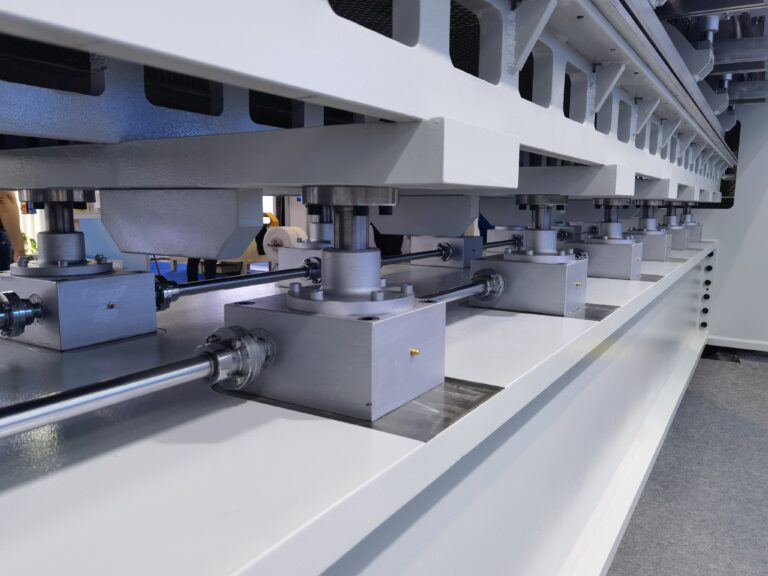
A complete multi-point lifting system may include:
- Multiple screw jacks
- Bevel gearboxes
- Connecting shafts
- Couplings
- One motor or multiple motors
- Limit switches
- Encoders
- Control cabinet
- Safety protection devices
Many heavy-duty applications use mechanical synchronization. In this design, one motor drives several screw jacks through shafts and bevel gearboxes. Therefore, each lifting point moves at the same time.
This structure improves lifting stability and reduces the risk of uneven movement.
For more related topics, you can explore NUODUN content on industrial lifting systems and synchronized screw jack systems.
Safety Factors and Mechanical Standards
Safety is important in every lifting system.
When engineers design a worm screw jack lifting system, they should check load safety, mechanical strength, emergency stop, limit protection, overload protection, and maintenance access.
In many machine projects, engineers refer to ISO 12100 Safety of Machinery. This standard gives basic ideas for machine risk assessment and risk reduction.
For jack-related safety, engineers may also refer to ASME B30.1. This standard covers construction, operation, inspection, testing, and maintenance for jacks, industrial rollers, air casters, and gantry systems.
However, each country and each project may have different rules. Therefore, users should confirm local safety rules before final design.
A screw jack is not only a drive part. It is part of a complete lifting system. Because of this, engineers should design the full system with safety, reliability, and easy maintenance in mind.
Common Applications of Worm Screw Jack Lifting Systems
Many industrial sectors use worm screw jack lifting systems because they offer stable lifting and accurate height control.
1. Production Line Height Adjustment
Factories use screw jacks for adjustable worktables, assembly lines, conveyor height adjustment, and automatic positioning equipment.
2. Metallurgical Equipment
Steel plants and heavy industries use screw jacks for furnace base adjustment, heavy platform lifting, mold positioning, and steel processing equipment.
3. Packaging Machinery
Packaging machines use screw jacks for filling machine height adjustment, sealing systems, labeling equipment, and format changeover mechanisms.
4. Medical and Laboratory Equipment
Medical and laboratory machines use screw jacks for lifting platforms, medical beds, testing equipment, and precision positioning systems.
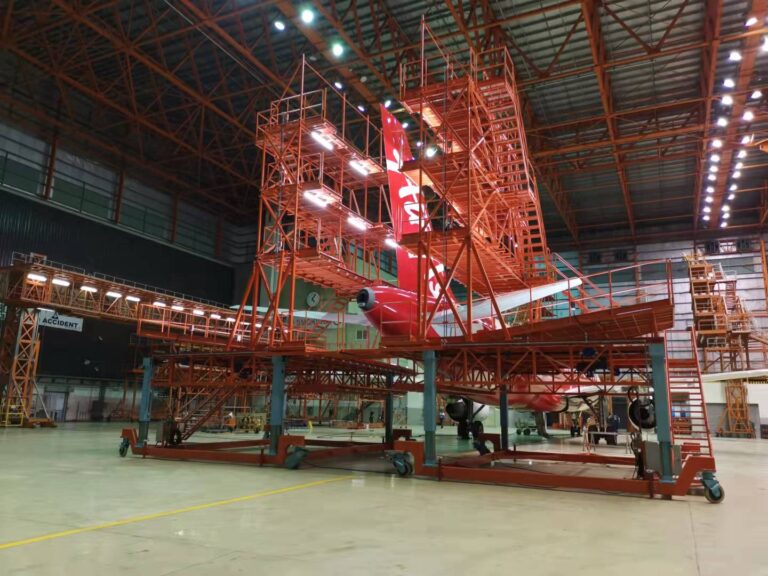
5. Maintenance Platforms
Maintenance systems use screw jacks for inspection platforms, repair platforms, and adjustable service structures.
6. Automation and AGV Systems
Automation equipment and AGV lifting systems use screw jacks when they need stable electric lifting. In some cases, screw jacks can replace hydraulic or pneumatic lifting systems.
NUODUN has also discussed this topic in Why Worm Gear Screw Jacks Are Replacing Hydraulic and Pneumatic AGV Lifting Systems.
How to Choose the Right Screw Jack Supplier
Choosing the right supplier is as important as choosing the right screw jack model.
A good screw jack supplier should help users with:
- Load calculation
- Model selection
- Screw type choice
- Gear ratio choice
- Motor matching
- Mounting layout
- Multi-point lifting design
- Custom stroke
- Limit switch options
- Encoder options
- OEM and ODM customization
At NUODUN Drive, we manufacture gear reducers, screw jacks, electric cylinders, and custom motion systems for industrial equipment.
Our team helps customers from early selection to final system layout. As a result, equipment manufacturers can build stable, safe, and reliable lifting solutions.
You can view more product categories on the NUODUN Products page. You can also contact our team through NUODUN Contact.
Conclusion
A worm screw jack lifting system gives heavy-duty machines a stable, compact, and reliable lifting solution.
However, correct selection needs more than a rated load. Engineers must check real load distribution, stroke length, screw buckling, lifting speed, duty cycle, safety factor, synchronization, and mounting layout.
For single-point lifting, users should focus on load, stroke, speed, and safety. For multi-point lifting, they should also focus on uneven load and synchronization.
In the end, the right screw jack system can improve equipment stability, reduce downtime, extend service life, and support safer industrial operation.
If you are designing a heavy-duty lifting system, NUODUN can help you select the right worm screw jack, gear reducer, bevel gearbox, motor, and complete mechanical drive solution for your application.