whatsapp:+86 13622680352



Why Worm Gear Screw Jacks Are Replacing Hydraulic & Pneumatic AGV Lifting Systems
With the rapid development of smart warehousing, automotive intelligent manufacturing, and cleanroom automation, Automated Guided Vehicles (AGVs) and Autonomous Mobile Robots (AMRs) have become indispensable for modern material handling.
While most manufacturers and system integrators focus heavily on navigation accuracy, driving stability, and fleet scheduling software, one critical component that determines overall operational reliability is often overlooked: the AGV lifting system.
The lifting mechanism is the core functional unit that enables AGVs to pick up, lift, and transfer materials. However, traditional lifting solutions struggle to meet the high-standard, long-term, and stable operation requirements of industrial AGVs. This has become a major pain point troubling AGV manufacturers worldwide.
The Major Drawbacks of Traditional AGV Lifting Solutions
Currently, three mainstream lifting methods dominate the AGV market: hydraulic cylinders, pneumatic actuators, and electric push rods. Each presents distinct failure points in demanding industrial environments:
❌ Hydraulic Cylinders: High Contamination & Maintenance Risks
Hydraulic lifting systems rely on fluid power. Over time, long-term operation inevitably causes oil leakage, which can catastrophically contaminate production workshops, precision electronic components, lithium battery materials, and finished goods. Additionally, they require regular oil replacement and seal inspections, leading to high maintenance costs and frequent equipment downtime.
❌ Pneumatic Actuators: Unstable Load Holding & Low Precision
Pneumatic systems lack an inherent self-locking function. When handling heavy loads or navigating uneven warehouse floors, air pressure fluctuations cause inconsistent lifting speeds and uneven force distribution. This leads to cargo sliding, position deviation, and platform tilting.
❌ Electric Push Rods: Poor Rigidity & Weak Heavy-Load Capacity
Standard electric push rods feature simple structures that lack structural rigidity and anti-backlash performance. Under frequent start-stop and heavy-load conditions, they are highly prone to mechanical deformation and loose gaps, making them unsuitable for the high-precision docking required in automotive and semiconductor assembly.
Why Worm Gear Screw Jacks Solve All AGV Lifting Pain Points
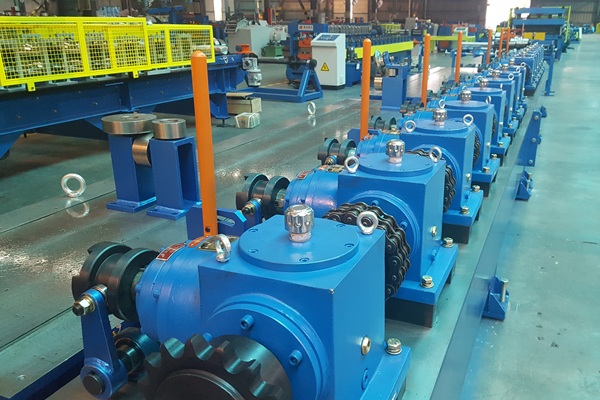
As a dedicated mechanical lifting device, the worm gear screw jack perfectly eliminates the shortcomings of traditional actuators. It has quickly become the preferred engineering solution for next-generation industrial AGVs—ranging from light-duty cleanroom AMRs to heavy-duty automotive assembly AGVs capable of lifting up to 10 tons.
| Feature | Worm Gear Screw Jacks | Hydraulic Cylinders | Pneumatic Actuators | Electric Push Rods |
| Leak Risk | 0% (Pure Mechanical) | High (Oil Leaks) | Low (Air Leaks) | None |
| Self-Locking | Excellent (Built-in) | Requires Brakes | None | Poor |
| Precision | High Synchronization | Medium | Low | Medium |
| Maintenance | Ultra-Low | High | Medium | Medium |
1. Pure Mechanical Lifting: 100% Clean & Leak-Free
Unlike hydraulic systems, screw jacks utilize pure mechanical transmission. With no hydraulic oil or high-pressure air sources required, there is zero risk of oil leakage or environmental pollution. This makes them fully compliant with the strict ISO cleanroom standards of lithium battery factories, semiconductor facilities, and food processing workshops.
2. Built-In Self-Locking: Safe Load Holding at Any Height
The unique worm and worm gear geometry provides an inherent self-locking mechanism. Once the AGV lifts the cargo to the target height, the screw jack mechanically locks the position without relying on external brakes. This effectively prevents cargo slipping or platform drops caused by pressure loss or floor vibrations.
3. High Synchronization Precision for Flat Material Handling
Multiple screw jacks can be mechanically or electronically linked for perfectly synchronized lift control. Even under off-center or maximum heavy loads, the platform remains perfectly level, eliminating the tilting issues common in multi-point hydraulic setups. This is critical for high-precision docking in automotive chassis marriage stations and precision parts transfer.
4. 24/7 Continuous Operation with Ultra-Low Maintenance
Featuring a compact, enclosed integrated structure with minimal wearing parts, screw jacks eliminate the need for routine fluid changes or seal replacements. They easily withstand the high-frequency, continuous start-stop cycles of automated warehouses, significantly improving AGV uptime and reducing Total Cost of Ownership (TCO).
5. Low-Profile, Customizable Design for Easy Integration
With a highly modular and low-profile design, worm gear screw jacks occupy minimal space and can be seamlessly embedded into narrow AGV chassis. Stroke lengths, lifting speeds, and load capacities can be completely customized to fit any design requirement.
Target Applications in Industrial Automation
Customized worm gear screw jack lifting systems are currently driving efficiency across several high-growth sectors:
- Smart Warehousing: High-capacity pallet handling AGVs and AMRs.
- Automotive Manufacturing: Heavy-duty AGVs for powertrain and battery pack assembly (up to 10 tons).
- Lithium-Ion Battery & Semiconductor Cleanrooms: Zero-emission, contamination-free material handling.
- Electronics Assembly: Ultra-low profile components for compact automated guided carts.
Optimize Your AGV Performance Today
If you are an AGV manufacturer or system integrator facing challenges with hydraulic leaks, poor lifting stability, low positioning accuracy, or soaring maintenance costs, our engineered screw jack solutions can transform your equipment’s reliability.
Contact us today to consult with our application engineers for a customized technical proposal!
Keywords: AGV lifting system, worm gear screw jack, automated guided vehicle components, industrial lifting mechanism, heavy-duty AGV, cleanroom automation, warehouse automation hardware, material handling equipment, mechanical actuator for AMR.