whatsapp:+86 13622680352



Why Precision Gear Reducers and Lifting Systems Are Critical in CT Medical Tables
Introduction
CT Scan systems have become indispensable in modern healthcare. While most discussions focus on imaging software and detector performance, the mechanical accuracy of the CT Scan medical table plays an equally critical role in ensuring high-quality diagnostic results.
A CT Scan table must deliver extremely precise patient positioning, stable movement, and long-term repeatability. To achieve this, manufacturers rely on advanced gear reducers, precision lifting systems, and intelligent motion control technologies. These components ensure smooth and accurate positioning while meeting strict medical safety requirements.
This article explains why precision transmission technology is essential for CT Scan medical tables and how modern motion systems improve imaging accuracy, patient comfort, and operational safety.
What Is a CT Scan Medical Table?
A CT Scan medical table is a motorized patient positioning system used in CT imaging procedures. It moves the patient into the scanning area and maintains precise alignment throughout the examination.
A CT Scan table is responsible for:
- Patient positioning inside the scanner
- Vertical height adjustment
- Longitudinal movement during scanning
- Load support and structural stability
- Safety control and emergency response
Even minimal positioning errors in a CT Scan system can directly affect image clarity and diagnostic accuracy.
Why CT Scan Positioning Accuracy Matters
Modern CT Scan imaging systems generate high-resolution cross-sectional images that require exact alignment between the patient and the scanner.
Poor positioning in a CT Scan procedure can lead to:
- Image artifacts and distortion
- Reduced diagnostic reliability
- Repeat scans and longer exam times
- Increased radiation exposure for patients
- Lower clinical efficiency
Therefore, the motion system of a CT Scan table must ensure consistent, repeatable accuracy across thousands of operation cycles.
Role of Precision Gear Reducers in CT Scan Systems
Precision gear reducers are core components in CT Scan table motion systems. They convert motor output into controlled torque and precise movement.
High Positioning Accuracy
In CT Scan applications, low-backlash reducers ensure precise control of table movement, reducing positioning errors to a minimum.
Smooth Motion Control
CT Scan examinations require patient comfort. Smooth acceleration and deceleration reduce vibration and improve the overall experience.
Reliable Load Handling
CT Scan tables must support patients of varying weights while maintaining consistent precision and stability.
Long-Term Stability
Hospitals require equipment that performs reliably over years of continuous CT Scan operation without degradation in accuracy.
CT Scan Lifting System Requirements
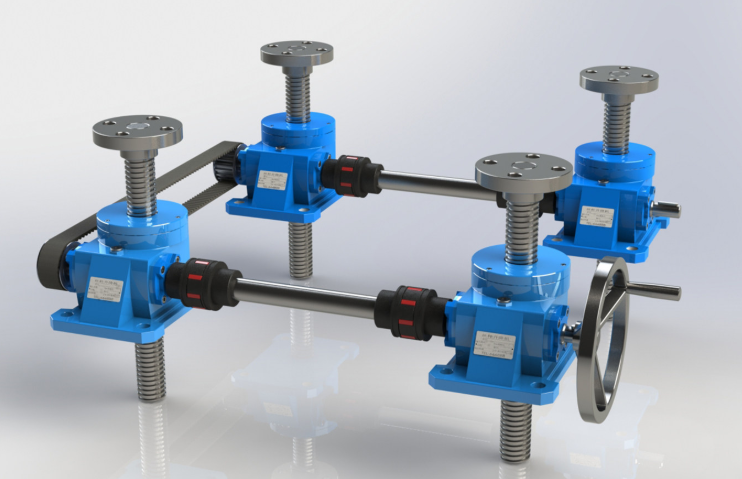
The lifting system is responsible for adjusting the height of the CT Scan table for patient access and positioning.
Key requirements include:
Safety Protection
The CT Scan lifting mechanism must prevent sudden drops or uncontrolled movement, even during power failure.
Structural Stability
Stable vertical movement ensures that CT Scan image quality is not affected by mechanical vibration.
Repeatable Precision
Every CT Scan positioning cycle must produce identical results regardless of load conditions.
Low Noise Operation
Modern CT Scan environments require quiet operation to improve patient comfort and reduce stress.
Safety Standards in CT Scan Motion Systems
CT Scan medical equipment must comply with strict international safety and performance standards.
Motion systems must include:
- Controlled speed regulation
- Emergency stop functions
- Overload protection mechanisms
- Real-time position feedback
- Redundant safety design
- Long-term operational reliability
These requirements make CT Scan motion systems significantly more advanced than standard industrial automation systems.
Emerging Trends in CT Scan Table Technology
The next generation of CT Scan tables is evolving rapidly with advancements in motion control and automation.
Intelligent Motion Systems
Modern CT Scan tables integrate sensors and feedback systems for real-time positioning and predictive maintenance.
Higher Precision Demand
As CT Scan imaging resolution increases, motion systems must achieve even tighter accuracy tolerances.
Compact and Lightweight Design
Manufacturers are developing smaller CT Scan drive systems without sacrificing performance or load capacity.
Enhanced Patient Experience
Smooth, quiet, and ergonomic CT Scan table designs are becoming key differentiators in medical equipment.
Conclusion
The performance of a CT Scan system depends not only on imaging technology but also on the precision of its mechanical motion system.
High-precision gear reducers and advanced lifting mechanisms are essential for ensuring accurate patient positioning, stable operation, and long-term reliability in CT Scan equipment. As medical imaging technology continues to advance, the demand for high-performance CT Scan motion systems will continue to grow.
For medical device manufacturers, investing in precision transmission technology is not optional—it is a fundamental requirement for delivering safe, accurate, and high-performance CT Scan systems.
Reference:https://www.radiologyinfo.org/en/info.cfm?pg=bodyct