whatsapp:+86 13622680352



Helical Gear Units vs Planetary Gear Reducers: Key Differences, Selection Guide, and Applications
When selecting a gear reduction solution for industrial or automation systems, two of the most widely used options are helical gear units and planetary gear reducers. Although both serve the same fundamental purpose—reducing speed and increasing torque—their mechanical architecture, performance characteristics, and ideal applications differ significantly.
This guide provides a structured comparison to help engineers, OEMs, and system integrators make the right decision.
1. Structural Design and Transmission Principle
Helical Gear Units
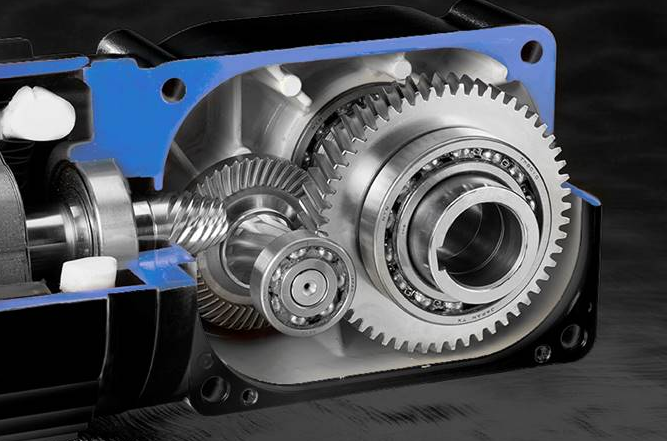
Helical gear units typically use parallel shaft or coaxial multi-stage gear trains. Each stage consists of a pair of meshing helical gears that gradually reduce speed.
- Sequential gear engagement (one pair per stage)
- Longer or wider gearbox housing
- Simple, intuitive mechanical layout
- Easy inspection and maintenance
Planetary Gear Reducers
Planetary gear systems consist of a sun gear, multiple planet gears, an internal ring gear, and a carrier.
- Multiple gears share the load simultaneously
- High reduction ratio within a single stage
- Compact, coaxial structure
- Complex assembly with high precision requirements
2. Torque Density and Size Efficiency
Planetary Gear Reducers (Advantage)
- High torque density due to load-sharing among multiple planet gears
- Compact footprint for the same torque output
- Ideal for space-constrained applications
Helical Gear Units
- Require larger housing and gear dimensions to achieve similar torque
- Better suited for installations where space is not a primary constraint
3. Noise, Smoothness, and Operating Characteristics
Helical Gear Units (Advantage)
- Gradual tooth engagement → low noise and vibration
- High contact ratio ensures smooth and stable operation
- Ideal for continuous-duty applications
Typical use cases:
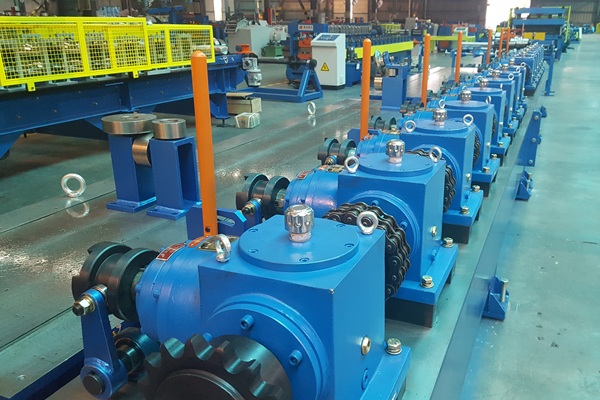
- Conveyor systems
- Mixers and agitators
- Fans and pumps
Planetary Gear Reducers
- High efficiency and compactness
- May produce slight gear whine at high speeds
- Better suited for dynamic loads and intermittent operation
4. Precision, Backlash, and Rigidity
Planetary Gear Reducers (Advantage)
- Designed for low backlash and high torsional stiffness
- Suitable for high-precision positioning systems
Typical applications:
- Servo systems
- CNC machinery
- Robotics
Helical Gear Units
- Can achieve good precision with hardened gears
- Generally used where ultra-low backlash is not critical
- Focus on durability and smooth power transmission
5. Cost, Maintenance, and Lifecycle
Helical Gear Units (Advantage)
- Simpler design → lower manufacturing cost
- Easy maintenance (accessible gears and bearings)
- Lower total cost of ownership (TCO) in standard industrial use
Planetary Gear Reducers
- Higher requirements for:
- Material quality
- Gear machining accuracy
- Assembly precision
- Higher initial and maintenance costs
- Cost justified in high-performance applications
6. Application-Based Selection Guide
Choose Helical Gear Units If:
- Long-duration, steady operation is required
- Noise reduction is a priority
- Maintenance simplicity is important
- Budget constraints exist
Typical industries:
- Food processing lines
- HVAC systems
- Water treatment
- General manufacturing
Choose Planetary Gear Reducers If:
- High torque is required in a compact space
- Precision positioning and low backlash are critical
- The system involves dynamic or shock loads
Typical industries:
- Robotics and automation
- Construction machinery
- Wind power yaw systems
- Rotating platforms
7. Why Choose NUODUN Gear Solutions?
NUODUN is gear reducer supplier specializing in both helical gear units and planetary gear reducers, offering:
- Custom gearbox design tailored to application requirements
- High-precision manufacturing and quality control
- Flexible configurations for torque, ratio, and mounting
- Engineering support for OEM and industrial integration
Whether your project prioritizes cost-efficiency and durability or compact high-performance transmission, NUODUN provides scalable solutions.
FAQ: Helical vs Planetary Gear Reducers
1. Which gearbox has higher efficiency?
Both can achieve high efficiency (typically 90–98%), but:
- Helical gear units excel in continuous operation
- Planetary reducers maintain efficiency under high load density
2. Are planetary gearboxes always better than helical gear units?
No. Planetary gearboxes are superior in compactness and precision, but helical gear units are often more economical, quieter, and easier to maintain.
3. Which one is better for servo motors?
Planetary gear reducers are preferred due to:
- Low backlash
- High rigidity
- Better dynamic response
4. Which gearbox lasts longer?
It depends on the application:
- Helical gear units: longer life in stable, continuous-duty environments
- Planetary gear reducers: excellent durability in high-load, compact systems
5. Can helical gear units handle high torque?
Yes, but they require larger size and multiple stages compared to planetary systems for the same torque output.
6. Which is easier to maintain?
Helical gear units are easier to service due to:
- Simpler structure
- Easier access to components
Conclusion
The choice between helical gear units and planetary gear reducers is not about which is universally better, but which aligns with your application requirements:
- Choose helical gear units for reliability, low noise, and cost efficiency
- Choose planetary gear reducers for compact, high-torque, and precision-driven systems
For tailored gearbox solutions, NUODUN offers both technologies with full customization to meet industrial demands.