whatsapp:+86 13622680352



How to Select a Helical Gear Unit: Ratio, Torque, Service Factor, and Mounting Guide
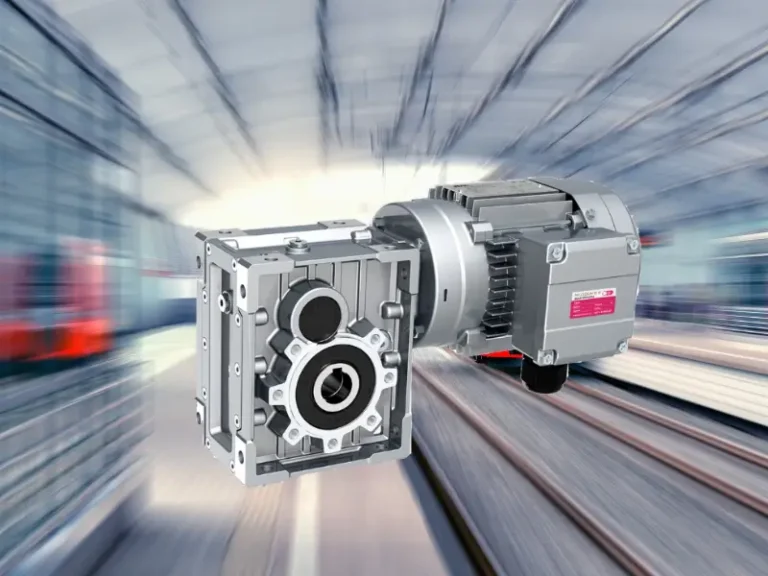
Selecting the right helical gear unit is not just about picking a reducer with the nearest ratio. In real projects, the correct selection path is much more systematic: first define the required ratio and torque, then apply the service factor, choose the smallest frame size that meets the rated power or rated torque requirement, and finally verify peak torque, overhung or radial load, thermal rating, and mounting arrangement. That basic logic is consistent with industrial gearbox selection procedures published by gearbox manufacturers and technical manuals.
1. Start with the real operating data
Before selecting a helical gear unit, the engineer should define the motor power, motor speed, required output speed, required output torque if known, load type, daily operating hours, start-stop frequency, and expected service life. Industrial selection guides consistently begin with speed, torque, duty severity, and application conditions because these inputs determine the reducer ratio, the service factor, and the minimum gearbox size.
At this stage, it is also important to understand whether the load is uniform, lightly shocked, moderately shocked, or heavily shocked. Bonfiglioli defines the service factor as a coefficient representing the severity of the duty cycle, while AGMA-based selection procedures also require the designer to account for service factor and overhung-load conditions before choosing a gearbox.
2. Calculate the nominal ratio and output torque
The nominal gear ratio is usually calculated as:
i = n1 / n2
where n1 is motor input speed and n2 is the required output speed. In practice, the calculated ratio is then matched to the nearest standard ratio available in the catalog. Manufacturer selection procedures explicitly follow this approach: determine input and output speed first, then select the closest gearbox ratio and evaluate the remaining transmission ratio, if any, through pulleys, chains, or external gearing.
If the required output torque is not directly given, it can be estimated from motor power and output speed:
T2 ≈ 9550 × Pm × η / n2
This gives a practical starting torque value for selection. From there, the actual gearbox candidate must be checked against catalog-rated torque or rated input power, not just the simple calculated torque. Bonfiglioli’s catalogs define both rated output torque and rated input power for selection, and note that catalog values are typically based on a service factor of 1.0.
3. Apply the service factor before choosing the size
This is where many incorrect gearbox selections begin. The calculated motor power alone is not enough. The application load must be adjusted with a service factor so that the gearbox is sized for real operating severity rather than ideal laboratory conditions. Bonfiglioli states that the service factor describes reducer duty severity, and its selection procedures tell users to determine the required service factor before choosing the unit.
A practical engineering method is to calculate an equivalent input power:
Peq = Pm × SF
Then select a gearbox whose rated input power Pn1 at the chosen ratio is at least equal to that equivalent power. Bonfiglioli’s catalogs explicitly define Pn1 as rated power at the input shaft for a service factor of 1, and selection charts are built around comparing the application demand with that rating.
4. Select the frame size from the rating table
Once the ratio and equivalent power are known, the next step is to go into the catalog and choose the nearest standard ratio row. Then compare the required power or torque with the allowable values for each frame size. Bonfiglioli’s selection procedure explicitly says to select the gear unit with the closest gear ratio and a rated power Pn1 that meets the application requirement, while other gearbox manuals follow the same logic with rated power, output torque, and thermal torque checks.
In practical terms, the correct choice is usually the smallest frame size that fully satisfies the rating requirement while still leaving enough margin for duty severity, installation limits, and later verification steps. Choosing too small a size may save cost initially but often creates overheating, reduced life, shaft-load problems, or premature failure under starting peaks and shock loads. The need to verify mechanical and thermal ratings after the preliminary frame-size choice is explicitly stated in gearbox selection manuals.
5. Check peak torque, not just running torque
A helical gear unit that looks acceptable under nominal running torque may still be undersized if the system experiences high startup torque, braking torque, impact loading, or frequent reversing. Industrial selection procedures therefore require confirmation of the gearbox’s mechanical output torque capacity after service factor is applied, not just the nominal torque requirement. AutomationDirect’s AGMA-based procedure, for example, separately checks thermal output torque and mechanical output torque.
This is why peak torque verification matters especially in conveyors, mixers, lifting systems, indexing machinery, and high-inertia loads. If the maximum motor torque or external shock torque exceeds the reducer’s allowable mechanical limit, the safer solution is usually to move to the next larger size or review the drivetrain design. That conclusion follows directly from manufacturer selection procedures that require output-torque verification beyond nominal running conditions.
6. Check radial load, overhung load, and axial load
Shaft loads are another common reason why gearbox selections fail in practice. If the output shaft drives a sprocket, pulley, chain wheel, or external gear, the shaft sees radial and sometimes axial load in addition to torque. Bonfiglioli defines the admissible radial load and notes that it must be greater than or equal to the computational radial load, and its catalogs also note that the listed values are conservative and depend on direction of rotation, force direction, and shaft location.
This means that a reducer selected only by torque may still be wrong for a belt-driven or chain-driven application. Designers should compare the actual shaft load with the catalog radial-load rating and apply any displacement or location factors required by the manufacturer. Technical manuals also advise checking overhung-load rating as a separate step during gearbox selection.
7. Do not skip the thermal rating check
Even if a gearbox meets ratio, torque, and shaft-load requirements, it may still overheat in continuous-duty service, high ambient temperature, or poor ventilation conditions. SEW-EURODRIVE explicitly states that the thermal rating needs to be checked for every gear unit, and both SEW and other manufacturers describe additional cooling options such as fans, cooling coils, or other thermal accessories when the thermal capacity is insufficient.
This is especially important for heavy-duty continuous operation, elevated ambient temperature, enclosed machine spaces, or low-speed high-torque duty where heat dissipation becomes the limiting factor. In these cases, the gearbox may need a larger housing, better lubrication strategy, or auxiliary cooling even when the nominal mechanical rating appears acceptable.
8. Confirm mounting position, shaft form, and motor connection
After the mechanical size is selected, the final model still has to be configured correctly. That includes horizontal or vertical mounting, foot or flange mounting, solid or hollow output shaft, shrink disc or keyed shaft arrangement, direct motor coupling or separate input shaft, and any accessories such as backstops or cooling devices. Catalogs and technical manuals consistently separate sizing from final configuration because installation position and shaft arrangement affect lubrication, space claim, sealing, and serviceability.
In other words, the correct reducer is not only a frame size and ratio. It is a complete assembled configuration that matches the machine layout, motor interface, shaft loading, ambient conditions, and maintenance requirements. That is why final selection should always end with a full configuration review rather than stopping at the rating table.
9. A simple engineering workflow for selecting a helical gear unit
In day-to-day engineering, the selection process can be reduced to one practical sequence:
- Calculate the target ratio from motor speed and required output speed.
- Estimate output torque from power and speed if torque is not directly known.
- Determine the service factor from load type, daily hours, starts, and duty severity.
- Convert motor power to equivalent power and select the nearest standard ratio.
- Choose the smallest frame size whose rated input power or rated torque is sufficient.
- Verify peak torque, radial or overhung load, and thermal rating.
- Finalize mounting position, shaft type, motor interface, and accessories.
That workflow directly reflects the logic used in industrial gearbox selection documentation.
Why customization matters
Many real applications do not fit a standard catalog configuration perfectly. The rated gearbox may be correct, but the project may still need a different output shaft, a special mounting flange, a custom ratio, non-standard lubrication, or a housing arrangement adapted to limited installation space. NUODUN’s official company pages describe the company as a gearbox and motion-control manufacturer covering helical gear reducers and other transmission products, and explicitly state that it provides customized motion solutions and OEM/ODM support. Public contact information on NUODUN’s site lists a Hangzhou, China address rather than a UK office.
For that reason, the strongest brand statement for this article is accurate and still commercially useful: NUODUN is a gear reducer supplier and manufacturer supporting customization for industrial applications, including tailored transmission solutions where ratio, shaft arrangement, interface, or operating conditions go beyond standard catalog options.
Conclusion
The best way to select a helical gear unit is to follow a disciplined sequence: calculate ratio and torque, apply service factor, choose the correct frame size from the rating table, then verify peak torque, shaft loads, thermal capacity, and mounting arrangement. Skipping any of those steps can lead to overheating, undersized bearings, poor service life, or unnecessary oversizing. Industrial selection manuals are remarkably consistent on this point: gearbox selection is not a one-number exercise; it is a system check.
FAQ
1. What is the first step in selecting a helical gear unit?
The first step is to define the application data: motor power, motor speed, required output speed, required torque, load type, operating hours, and duty severity. Manufacturer selection procedures start with these inputs because they determine ratio, service factor, and size.
2. How do I calculate the ratio for a helical gear unit?
The nominal ratio is calculated as input speed divided by required output speed: i = n1 / n2. After that, the calculated value is matched to the nearest standard ratio in the catalog.
3. Why is service factor important in gearbox selection?
Service factor accounts for duty severity such as shock loading, starts, operating hours, and general application stress. Manufacturers define it as a measure of operating-cycle severity and require it before selecting the gearbox size.
4. Should I size the gearbox by motor power alone?
No. Motor power alone is not enough. The actual selection should be based on equivalent power or required torque after service factor is applied, and then verified against rated input power, mechanical torque, and thermal limits.
5. What is rated input power Pn1?
In gearbox catalogs, Pn1 is the rated power at the input shaft, usually based on a service factor of 1.0. It is one of the core values used to select the proper frame size at a given ratio.
6. Why do I need to check radial or overhung load?
Because pulleys, sprockets, chains, and external gears apply shaft forces in addition to torque. A gearbox can meet torque requirements and still fail the shaft-load check if the radial or overhung load exceeds catalog limits.
7. Is thermal rating always necessary?
Yes for proper engineering selection. SEW-EURODRIVE explicitly states that thermal rating must be checked for every gear unit, especially in continuous-duty or high-temperature applications.
8. What should be confirmed after selecting the gearbox size?
You should confirm peak torque, radial or overhung load, thermal rating, mounting position, shaft type, motor connection, and any accessories such as cooling, backstops, or special sealing.
9. Does NUODUN support custom helical gear unit solutions?
According to its official website, NUODUN supports customized motion solutions and OEM/ODM services, and its product range includes helical gear reducers