whatsapp:+86 13622680352



Hypoid Gear Reducer vs Worm Gear Reducer: Efficiency Comparison
In mechanical systems requiring torque reduction, gear reducers are essential components. Among the most commonly used types are Hypoid gear reducers and Worm gear reducers. While both serve the purpose of reducing speed and increasing torque, there are key differences in their efficiency, especially under continuous running conditions and higher reduction ratios. This article will compare these two gear types, highlighting why Hypoid gear reducers generally outperform Worm gear reducers in terms of efficiency and energy consumption.
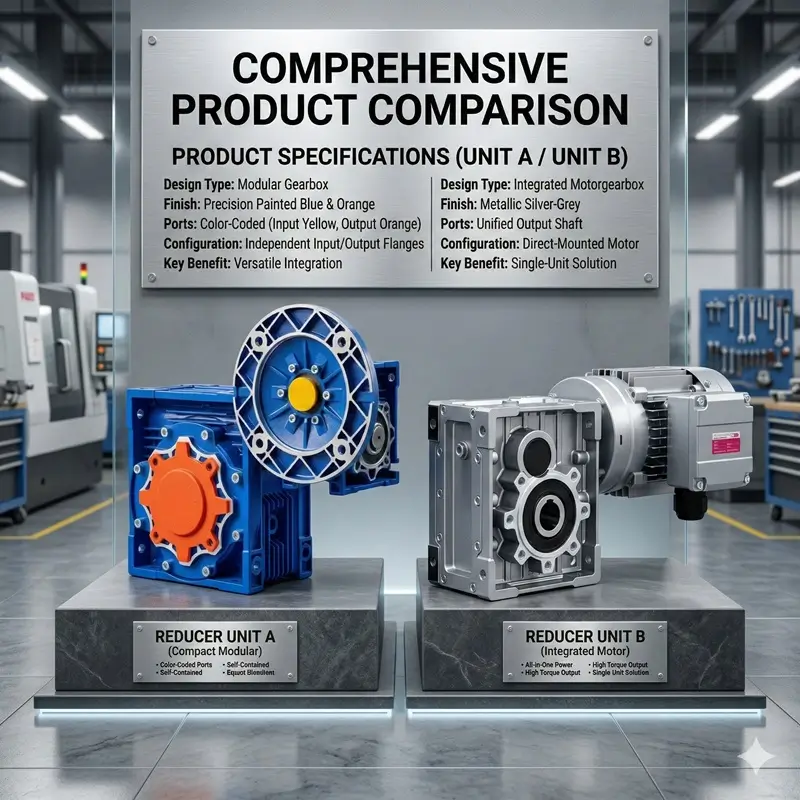
Pain Points in Traditional Worm Gear Reducers:
- Efficiency Loss: Worm gears typically experience significant efficiency loss due to the large sliding contact area between the worm and the gear, resulting in high friction.
- Heat Generation: Increased friction leads to higher temperatures, which, in turn, require stronger cooling systems and larger motors.
- Energy Consumption: To achieve the desired output torque, worm gear reducers often require larger motors, leading to higher energy consumption and operating costs.
- Lubrication Sensitivity: Worm gears are highly sensitive to lubrication quality and temperature, which can affect both their efficiency and service life.
Core Technology Breakdown:
- Hypoid Gear Reducers:
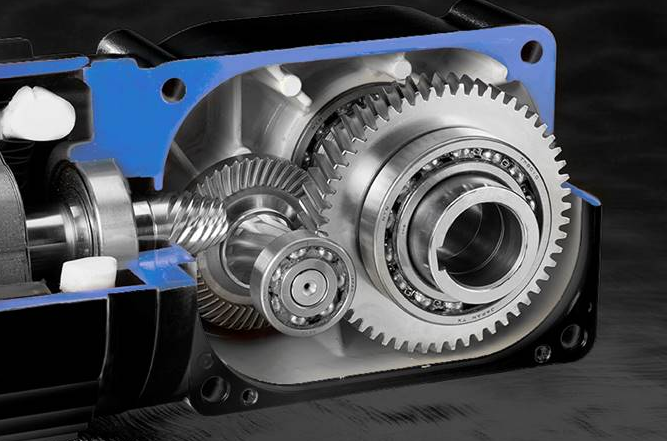
- Gear Type: Hypoid gears primarily use spiral bevel gears or quasi-hyperboloid gears, engaging with a “partially sliding” contact that reduces friction and heat generation.
- Efficiency: Typical efficiency ranges from 90% to 95% in a single-stage configuration. The efficiency loss is gradual as the reduction ratio increases, making it suitable for continuous running and high-speed applications.
- Lubrication: With lower friction and a more stable lubrication condition, Hypoid reducers are less sensitive to oil film shear and temperature changes, leading to longer operational lifespans.
- Worm Gear Reducers:
- Gear Type: Worm gears primarily rely on sliding contact between the worm and the gear, resulting in higher frictional losses and, consequently, lower efficiency.
- Efficiency: Efficiency typically ranges between 40% and 85%, with efficiency dropping sharply as the reduction ratio increases due to increased sliding friction.
- Heat and Power Consumption: The higher friction generates more heat, requiring larger motors and more robust cooling solutions. As a result, worm gears are less energy-efficient, especially for high-load, long-duration applications.
Key Differences Between Hypoid and Worm Gear Reducers:
| Attribute | Hypoid Gear Reducer | Worm Gear Reducer |
|---|---|---|
| Efficiency Range | 90%–95% single-stage | 40%–85%, decreases with higher ratios |
| Heat Generation | Low, requires smaller motors | High, requires larger motors and cooling |
| Lubrication Sensitivity | Less sensitive to oil film and temperature changes | Highly sensitive to lubrication and temperature |
| Power Consumption | Lower motor power required | Larger motors needed for same torque |
| Impact of Higher Reduction Ratios | Gradual efficiency loss | Rapid efficiency decline with higher ratios |
Practical Application and Selection Criteria:
- When to Choose Hypoid Gear Reducers:
- Efficiency and Energy Consumption: If your priority is energy savings, continuous operation, and minimizing heat generation (such as in conveyor systems, packaging machinery, or drive motors for walking systems), Hypoid gear reducers are generally the best option.
- Long-Term Use: Hypoid reducers excel in applications requiring consistent performance over long durations due to their high efficiency and low friction.
- When to Choose Worm Gear Reducers:
- High Reduction Ratios and Self-locking Feature: Worm gears are ideal for applications that need extremely high reduction ratios (such as simple lifts, positioning mechanisms) and self-locking characteristics. However, this comes at the cost of lower efficiency and higher heat generation.
- Cost Sensitivity: If cost is a major consideration and efficiency is less critical, worm gear reducers may be a more affordable choice despite their higher operational costs.
At NUODUN, we specialize in the development and manufacturing of gear reducers, motors, and linear transmission solutions. Our RV worm drive and Hypoid gear reducers are engineered to meet the highest standards of efficiency, durability, and cost-effectiveness. By choosing NUODUN, you are assured of a high-performance product tailored to your specific engineering needs, backed by years of expertise in gear technology.
FAQs:
- What is the primary difference between Hypoid and Worm Gear Reducers?
Hypoid gears use spiral bevel gears with minimal sliding contact, resulting in higher efficiency and less heat generation. Worm gears rely on large sliding contact, leading to lower efficiency and more heat. - Why is efficiency lower in Worm Gear Reducers?
The sliding contact between the worm and the gear generates more friction, which results in higher heat and lower efficiency, especially with larger reduction ratios. - Which reducer is better for high-torque applications?
For high-torque and continuous operation, Hypoid gear reducers are typically better due to their higher efficiency and lower energy consumption. - Can Worm Gear Reducers be used in all applications?
While Worm Gear Reducers are ideal for applications requiring high reduction ratios and self-locking features, they are not suitable for energy-efficient, high-load, or continuous applications due to their lower efficiency and higher power requirements. - Are Hypoid Gear Reducers more expensive than Worm Gear Reducers?
Hypoid reducers tend to be more efficient and require smaller motors, making them cost-effective over the long term. However, they may have a higher initial cost than worm gears, which are often used in simpler applications.
Ready to optimize your system’s efficiency? Contact NUODUN today for expert guidance and high-quality gear reducer solutions tailored to your specific needs.
You May Also Be Interested In:
- Bevel Gear Ball Screw Jack Troubleshooting Guide: Common Failures and Practical Solutions
- Bevel Gear Ball Screw Jack: Applications, Advantages
- Bevel Gear Ball Screw Jack Maintenance Guide: Practical Tips to Maximize Service Life and Precision
- Common Faults and Treatment Methods of Planetary Gear Reducers for Roller Press Applications
- Daily Maintenance Strategies for Gear Reducers