whatsapp:+86 13622680352



Failures of Planetary Gear Reducers Used in Roller Press Systems
Introduction
The roller press is one of the most important core machines in modern cement production lines, widely used in raw material grinding and cement finish grinding systems. Its operating stability directly affects production capacity, energy consumption, and overall plant efficiency.
As a key transmission component of the roller press, the planetary gear reducer plays an irreplaceable role. Compared with conventional gearboxes, planetary gear reducers offer high power density, compact structure, large transmission ratios, high efficiency, smooth operation, and low noise. These advantages make them particularly suitable for roller press applications characterized by high torque, heavy load, and continuous operation.
However, once a bearing or gear inside a planetary reducer is damaged, the consequences can be severe. In many cases, internal components are completely destroyed, making root cause analysis extremely difficult and leading to long downtime and high repair costs. Therefore, effective maintenance and early fault prevention are essential to ensure the stable operation of roller press systems.
This article systematically analyzes the common failures of planetary gear reducers used in roller presses, focusing on lubrication, vibration, temperature, noise, and structural issues, and provides practical recommendations to reduce failure rates and extend service life.
1. Transmission System of Roller Press Planetary Gear Reducers
A typical roller press consists of:
- Two main drive motors
- Two planetary gear reducers
- Shrink discs (shrink couplings)
- Rollers and roller bearings
- Frame and torque arms
- Hydraulic loading system
- Lubrication system
- Feeding system
Each roller is driven independently by an electric motor through a universal coupling and a planetary gear reducer. The reducer is mounted at the roller shaft end and fixed using a shrink disc, while the housing is connected to a torque support arm.
This configuration allows the planetary reducer to transmit extremely high torque within a limited installation space, but it also means that any internal failure directly impacts the entire grinding system.
2. Structural Characteristics of Planetary Gear Reducers for Roller Presses
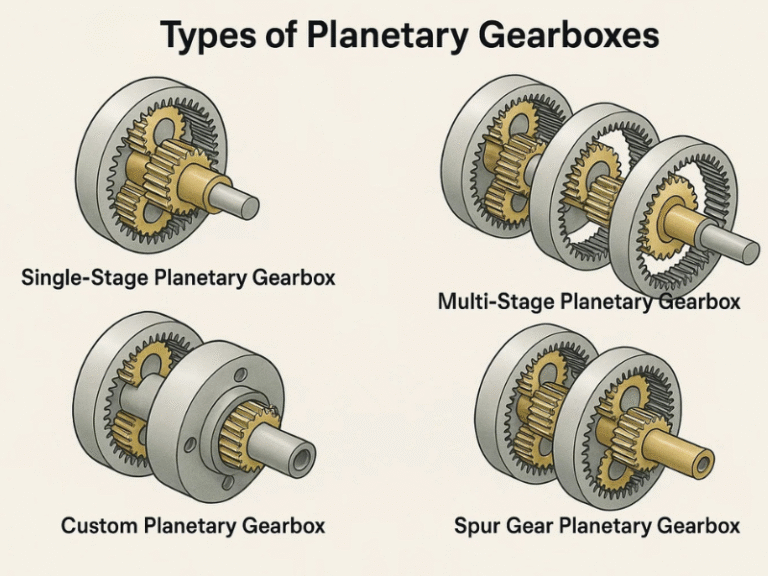
Planetary gear reducers used in roller press applications typically adopt a multi-stage transmission design, consisting of:
- One high-speed parallel shaft gear stage
- Two planetary gear stages
The power flow is as follows:
- Power enters through the input gear shaft
- The high-speed gear stage reduces speed and increases torque
- The high-speed planetary stage distributes power to multiple planet gears
- Torque is transferred to the low-speed planetary stage
- The output hollow shaft (planet carrier) drives the roller press main shaft
This structure enables large reduction ratios and high output torque, but also results in a high concentration of gears and bearings inside a compact housing. Once lubrication or alignment problems occur, damage can escalate rapidly.
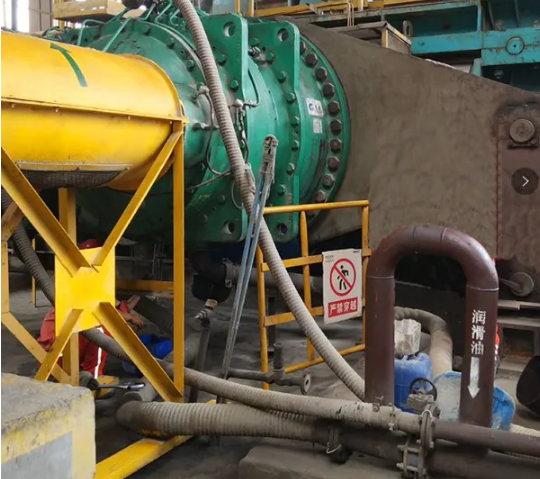
3. Common Failure Modes of Roller Press Planetary Gear Reducers
Planetary gear reducers have excellent load-sharing characteristics, but their compact internal structure also makes them highly sensitive to lubrication quality, contamination, and operating conditions.
In daily equipment management, special attention must be paid to:
- Lubrication condition
- Oil quality
- Temperature rise
- Vibration and abnormal noise
If abnormalities are detected, the reducer must be stopped immediately for inspection to prevent catastrophic damage.
3.1 Lubrication-Related Failures
3.1.1 Oil Leakage
Oil leakage is one of the most common issues in planetary gear reducers. Typical leakage points include:
- Joint surface between housing and cover
- Oil level sight glass interface
- Output shaft and bearing end cover
- High-speed shaft and bearing end cover
- Fireproof breather cap
Oil leakage not only contaminates the working environment but also leads to lubricant loss and accelerated wear.
Main Causes
- Inadequate machining accuracy of sealing surfaces
- Improper sealing structure design
- Unsuitable sealing materials
- Aging of seals under high temperature
Corrective Measures
- Apply anaerobic sealant on housing joint surfaces during maintenance
- Improve shaft-end sealing structures to allow leaked oil to return to the gearbox
- Add groove-type sealing rings or secondary seals at critical shaft locations
Proper sealing design is a fundamental requirement for long-term gearbox reliability.
3.1.2 Lubricant Quality Degradation
Lubricant contamination is a hidden but extremely dangerous issue. Common contaminants include:
- Abrasive dust and cement particles
- Wear debris from gears and bearings
- Moisture and water vapor
Oil degradation leads to viscosity reduction and poor lubrication performance. In severe cases, deteriorated oil can cause internal paint blistering and peeling, and detached paint fragments may block oil pipelines, resulting in rapid bearing failure.
Preventive Measures
- Prevent foreign matter ingress at all times
- Regularly clean oil station filters
- Inspect and clean magnetic drain plugs to remove metal particles
- Perform quarterly oil analysis to monitor oil condition
Advanced filtration technologies, such as offline fine filtration systems, can remove both soft and hard particles, effectively preventing micropitting and significantly extending bearing life.
3.1.3 Poor Lubrication Design
Due to their compact structure, planetary gear reducers often suffer from insufficient heat dissipation. Some designs rely solely on spray lubrication with minimal oil retention, which poses risks such as:
- Poor lubrication of low-speed sun gears
- Inadequate lubrication at intermediate planetary stages
- High sensitivity to oil supply interruptions
Improvement Measures
- Use an external oil station with spray lubrication to improve cooling
- Install a U-shaped return oil pipe to increase internal oil level
- Ensure adequate lubrication of intermediate and low-speed internal gears
Field practice shows that these improvements can significantly reduce operating temperature and improve overall reliability.
3.1.4 Application of Oil Analysis Technology
Oil analysis is an effective predictive maintenance tool. By monitoring:
- Oil contamination levels
- Particle size distribution
- Wear metal concentration
maintenance teams can evaluate internal wear conditions and predict the remaining service life of critical components.
Oil analysis allows faults to be detected before vibration or noise becomes noticeable, making it an essential tool for high-value planetary gear reducers.
3.2 Shaft Breakage in Planetary Gear Reducers
Shaft failure is a serious mechanical fault, typically presenting as:
- Cracks along the shaft surface
- Sudden shaft fracture
Main Causes
- Severe vibration and dynamic overload
- Stress concentration caused by diameter steps or keyways
- Manufacturing defects during forging or heat treatment
Corrective Action
Once shaft cracking or fracture occurs, replacement is the only safe solution. Temporary repairs are not recommended due to high risk.
Preventing shaft failure relies on controlling vibration, ensuring correct assembly, and selecting high-quality materials.
3.3 Excessive Vibration and Abnormal Noise
Severe vibration and loud noise during operation often indicate advanced internal damage, such as:
- Gear tooth scuffing and adhesion
- Broken or chipped gear teeth
- Fatigue cracking of planetary gears
- Pitting on internal ring gears
- Bearing damage
Main Causes and Solutions
(1) Gear Tooth Damage
- Wear, scuffing, pitting, or uneven contact
Solution:
Replace severely worn gears promptly.
(2) Poor Gear Meshing and Uneven Load Distribution
- Leads to tooth breakage or ring gear fracture
Solution:
- Replace damaged gears
- Adjust bearing clearance
- Improve lubrication conditions
(3) Improper Fit Between Gear and Shaft
- Excessive bore tolerance
- Poor assembly accuracy
This results in eccentricity, looseness, and vibration.
Solution:
- Correct gear–shaft fit tolerances
- Ensure precise assembly and secure fastening
4.Importance of Preventive Maintenance
Preventive maintenance is a strategic discipline that ensures gear reducers operate reliably, efficiently, and safely throughout their intended service life. Rather than reacting to failures after they occur, preventive maintenance emphasizes early detection, systematic inspection, and timely intervention. For industrial power transmission systems, this approach is essential to maintaining production continuity and controlling total lifecycle costs.
FAQ
Q1: What is preventive maintenance?
Preventive maintenance involves regular inspection, monitoring, and servicing of gear reducers to prevent failures before they occur.
Q2: How often should it be carried out?
Basic checks should be done daily, lubrication and operating conditions checked periodically, and detailed inspections conducted monthly or quarterly, depending on workload and environment.
Q3: What happens without preventive maintenance?
Minor issues can escalate into major failures, leading to unplanned downtime, higher repair costs, and reduced equipment lifespan.
Q4: How does preventive maintenance reduce costs?
It minimizes emergency repairs, avoids secondary damage, and extends component life, lowering overall operating and maintenance costs.
Q5: Does preventive maintenance support predictive maintenance?
Yes. It provides baseline data that supports condition monitoring and predictive maintenance systems.
Conclusion
Preventive maintenance is essential for reliable, long-term operation of planetary gear reducers. It reduces failure risk, extends service life, and improves production efficiency. As a professional transmission equipment manufacturer, NUODUN supports OEM solutions and delivers reliable gear reducers to help customers achieve stable, cost-effective operations.