whatsapp:+86 13622680352



Pump Drive Train: From Coupled Gearboxes to Direct-Mounted Planetary Drives
Introduction: Why Pump Drive Trains Are Being Re-Engineered
For decades, the mechanical layout of industrial pump units has remained largely unchanged. Whether for rotor pumps, screw pumps, or other positive displacement pumps, the conventional solution typically consists of a foot-mounted gearbox, flexible couplings, and a separately installed motor, all aligned along a long shaft system.
This architecture is familiar, proven, and widely supported—but it is also increasingly misaligned with modern engineering priorities. Today’s pump systems are expected to be more compact, easier to install, simpler to maintain, and better suited for modular skid and mobile applications.
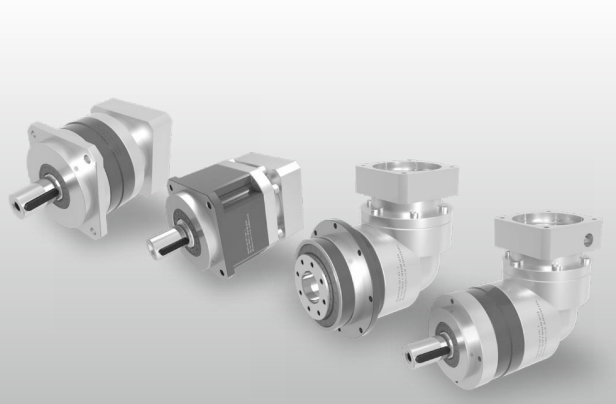
As a result, many OEMs and system integrators are reconsidering the entire shaft system design. One of the most significant shifts is the transition from a “gearbox + coupling” drive train to an integrated “planetary gear reducer + motor” direct-drive configuration.
This article examines that transformation from a mechanical engineering perspective, focusing on shaft system reconstruction, dynamics, installation, and long-term reliability.
Traditional Pump Shaft System: Structure and Practical Limitations
Typical Shaft Layout in Conventional Pump Units
In a traditional configuration, the torque path follows a long and segmented chain:
- Pump shaft
- Flexible coupling
- Gearbox input shaft
- Internal gear stages
- Gearbox output shaft
- Second coupling
- Motor shaft
Each interface introduces alignment requirements, tolerance accumulation, and potential failure points.
Common Issues Observed in the Field
While technically functional, this layout presents several practical challenges:
- Long shaft systems amplify misalignment sensitivity
- Two coupling sets increase installation and maintenance workload
- Large axial space requirement complicates pump room and skid layouts
- Higher vibration and noise risk due to multiple elastic interfaces
- Maintenance pain points, such as coupling wear, realignment after service, and limited access space
From the perspective of maintenance personnel, replacing couplings or re-aligning shafts often requires partial disassembly of surrounding piping or structural elements, especially in compact installations.
The Integrated Concept: Pump + Planetary Gear Reducer + Motor
What “Direct-Mounted” Really Means
In an integrated drive system, the pump, planetary gear reducer, and motor are arranged in a coaxial, rigidly connected assembly:
- The pump is flange-mounted directly to the planetary reducer
- The reducer is flange-mounted to the motor (typically B5 or B14 interface)
- Torque is transmitted through a short, rigid shaft path without external couplings
This configuration fundamentally changes the mechanical behavior of the system.
Immediate Structural Benefits
By eliminating intermediate couplings and foot-mounted gearboxes:
- The shaft system becomes significantly shorter
- The number of alignment interfaces is reduced
- The entire drive train behaves more like a single mechanical unit
For pump designers, this enables compact geometry without compromising torque capability.
Shaft System Dynamics and Reliability Implications
Effect of Shorter Shaft Length on Dynamics
From a mechanical dynamics standpoint, reducing shaft length has several positive effects:
- Higher critical speed due to increased stiffness
- Higher natural frequencies, reducing resonance risk in operating range
- Lower bending deflection under radial and axial loads
These changes improve operational stability, particularly for pumps running continuously or under fluctuating load conditions.
Influence on Torsional Vibration
In traditional layouts, torsional vibration propagates through multiple elastic elements—primarily flexible couplings. Over time, this can lead to:
- Coupling fatigue
- Increased backlash effects
- Noise and micro-slip
By reducing the number of couplings—or eliminating them entirely—the torsional vibration path becomes shorter and more predictable, which improves long-term reliability.
Engineering Evaluation Methods
From an engineering perspective, shaft system redesign is typically validated using:
- Simplified beam models for deflection analysis
- Torsional vibration calculations
- Finite element analysis (FEA) for dynamic behavior
In most comparative studies, integrated planetary drive systems demonstrate lower dynamic amplification factors than conventional coupled systems.
Installation and Commissioning Advantages
Simplified Alignment Process
One of the most immediate benefits appears during installation.
Traditional systems require:
- Alignment between motor and gearbox
- Alignment between gearbox and pump
Each alignment step consumes time and skilled labor.
In contrast, an integrated planetary drive system:
- Is factory-aligned
- Requires minimal or no on-site shaft alignment
- Reduces installation time significantly
For EPC contractors, this translates directly into lower commissioning cost and reduced schedule risk.
Pre-Assembled Modular Delivery
Many integrated pump units are delivered as fully assembled modules, allowing on-site teams to focus on:
- Positioning
- Leveling
- Piping connection
This approach is especially valuable for skid-mounted systems and retrofit projects.
Maintenance Perspective: Fewer Components, Fewer Failures
Reduced Wear Components
By eliminating flexible couplings and separate gearbox foundations, the system removes several common failure points:
- Coupling elastomers
- Coupling hubs
- Gearbox foot bolts and shims
This simplifies spare parts management and reduces unplanned downtime.
Easier Module Replacement
In many installations, maintenance can be performed by removing the entire pump-drive module as a single unit. This approach:
- Minimizes on-site repair time
- Improves safety
- Allows off-site refurbishment
For plants operating multiple identical pump units, this modularity is a significant operational advantage.
Impact on Layout, Skid Design, and Standardization
Pump Room and Frame Layout
A shorter drive train frees valuable space on the drive side of the pump. This allows:
- Improved access to valves and instrumentation
- Cleaner piping routes
- Better operator ergonomics
In tight pump rooms or offshore platforms, these gains are often decisive.
Benefits for Skid-Mounted Systems
Integrated pump-drive modules align naturally with skid design principles:
- Standardized module length
- Easier series configuration
- Faster assembly and testing
This modularity supports scalable system design across different flow rates and pressures.
OEM Standardization Strategy
For OEMs, direct-mounted planetary drives help:
- Reduce the number of gearbox variants
- Standardize pump, motor, and reducer interfaces
- Simplify engineering documentation and inventory
Key Engineering Considerations During Implementation
Interface Standards
Critical interface elements include:
- Pump flange dimensions
- Shaft extension geometry
- Motor flange type and shaft length
Proper matching is essential to ensure load distribution and service life.
Alignment Tolerances
Although alignment effort is reduced, precision still matters. Concentricity and axial runout between pump and reducer must be controlled within specified tolerances to avoid bearing overload.
Retrofit and Replacement Projects
When upgrading existing installations:
- Foundation height differences may require shims or adapter plates
- Base frame modifications may be necessary
- Piping flexibility should be checked
A structured retrofit strategy ensures smooth transition from conventional gearboxes to planetary reducers.
Frequently Asked Questions
Is a direct-mounted planetary reducer suitable for all pump types?
It is particularly well suited for rotor pumps, screw pumps, and other positive displacement pumps with high torque demand and moderate speed.
Does eliminating couplings increase shock load risk?
Not when the reducer is correctly sized. Planetary gear reducers are designed to handle high torque density and dynamic loads.
Are integrated systems harder to service?
In most cases, they are easier to service due to modular replacement and reduced alignment work.
Can this design be used in hazardous or offshore environments?
Yes. Compact, rigid drive trains are often preferred in offshore and marine applications due to space and weight constraints.
How much installation time can be saved?
Depending on project complexity, installation and commissioning time can be reduced by 20–40%.
Conclusion
The transition from traditional “foot-mounted gearbox + coupling” systems to direct-mounted planetary gear reducers with motors represents a fundamental rethinking of pump drive train design.
By shortening the shaft system, reducing interfaces, and integrating components, engineers achieve:
- Higher mechanical stability
- Simplified installation and maintenance
- More compact and modular layouts
When implemented with proper engineering discipline, this approach delivers both technical and economic benefits across the entire lifecycle of a pump system.
NUODUN is a professional manufacturer specializing in drive systems, power transmission, and linear motion actuation components. With extensive experience in planetary gear reducers and integrated drive solutions, NUODUN supports OEMs and system integrators in redesigning pump drive trains for modern applications.