whatsapp:+86 13622680352



Gearbox Maintenance and Lubrication Guide
Gearboxes are core components in industrial machinery, responsible for transmitting power, reducing speed, and increasing torque. Because they operate under continuous load, high temperature, and varying environmental conditions, proper maintenance and lubrication are essential to ensure reliability and prevent costly failures.
A poorly maintained gearbox can suffer overheating, oil leakage, gear wear, bearing failure, and even catastrophic breakdown. On the other hand, correct maintenance procedures significantly extend lifespan, reduce downtime, improve efficiency, and protect your investment.
This comprehensive guide outlines the best practices for gearbox lubrication, inspection, maintenance intervals, troubleshooting, and safe operation. The content is based on industrial field experience and NUODUN’s engineering expertise as a transmission equipment manufacturer supporting OEM customization.
1. Lubrication Fundamentals for Industrial Gearboxes
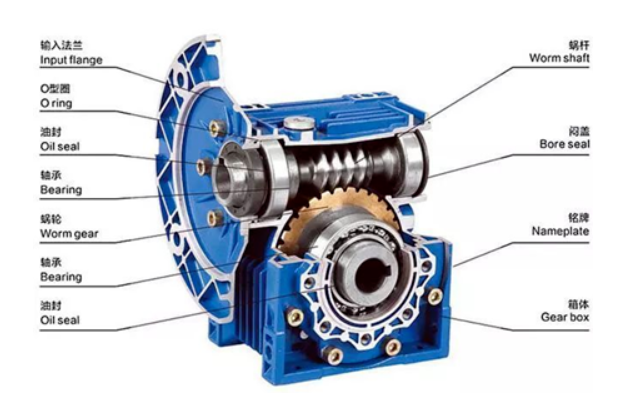
Proper lubrication is the foundation of gearbox maintenance. Gear reducers rely heavily on oil-lubricated gear meshes and bearings to minimize friction, dissipate heat, and prevent metal-to-metal contact.
1.1 Oil Level Requirements
Most gear reducers use oil-bath lubrication.
Before operating a new gearbox, always:
- Fill the oil to the specified level (according to the oil gauge markings)
- Confirm that oil reaches the recommended depth on the dipstick
- Ensure the gearbox is stable and level before measuring oil
Operating the gearbox without correct oil level can lead to overheating, noise, increased wear, and gear scuffing.
1.2 Oil Change Cycle for Gearboxes
Oil change intervals are critical for system reliability because metal particles, heat, and contaminants degrade oil over time.
Recommended schedule:
- Initial break-in period:
Replace oil after 7–14 days (150–300 hours).
This removes impurities generated during gear meshing run-in. - Second oil change:
Replace again after 3 months of operation. - Regular operation:
- For gearboxes running continuously: replace every 6–8 months
- For gearboxes operating under 8 hours/day: replace every 10–12 months
Oil should be replaced immediately if it becomes:
- Darkened
- Contaminated
- Mixed with water
- Oxidized or degraded
1.3 Using the Correct Oil Type
Never mix different oil brands or viscosity grades.
Before filling new oil:
- Use the same oil type previously used
- Warm the new oil slightly to improve flow
- Use the same oil to flush gears before final filling
Mixing incompatible oil formulations can cause foaming, oxidation, lubrication failure, and accelerated wear.
1.4 Cooling and Lubrication Options
Standard gearboxes rely on oil-bath lubrication and natural cooling.
However, special conditions require enhanced lubrication:
Use circulating oil lubrication when:
- Operating temperature exceeds 90°C
- Load exceeds the thermal capacity (PG1)
- Continuous heavy-duty operation
- High-speed input conditions
Use cooling pipelines or heat exchangers when:
- Gearbox overheats due to ambient temperature
- Sump oil rapidly oxidizes
- Surrounding ventilation is insufficient
After a gearbox stops for 24+ hours, always allow bearings and gears to re-lubricate before applying load.
2. Gearbox Maintenance and Routine Care (Fully Expanded Section)
Proper maintenance is essential for ensuring long-term gearbox reliability. Even the highest-quality gear reducers require regular inspections, lubrication, and operational management to prevent premature wear or system failure. A well-maintained gearbox minimizes downtime, reduces noise and vibration, prevents overheating, and extends the service life of gears, shafts, and bearings.
Below is a comprehensive breakdown of recommended maintenance actions and inspection guidelines.
2.1 Transmission System Inspection
Gearboxes should be inspected at regular intervals—monthly for standard-duty applications and weekly for heavy-duty or continuous operations.
During inspection:
- Check gears for scuffing, pitting, adhesion, scratches, and abnormal wear
- Examine shafts for runout or bending
- Inspect gear mesh contact patterns to ensure uniform load distribution
- Evaluate mounting bolts and base plates for looseness or misalignment
If wear is detected, corrective action should be taken immediately. Replacement parts must meet OEM specifications, and any newly installed components should undergo proper break-in procedures before returning to full load operation.
2.2 Monitoring Oil Level & Oil Temperature
Oil level and temperature directly influence gearbox life.
What to check regularly:
- Oil level relative to the dipstick markings
- Oil coloration, clarity, viscosity, and odor
- Temperature stability under different load conditions
- Leaks around shaft seals and housing joints
Key actions:
- If oil level drops below the lower marking, refill immediately
- For circulating oil systems, monitor oil pressure; clean or replace filters if pressure drops
- Investigate signs of rising temperature, which may indicate:
- Low oil level
- Poor ventilation
- Oil degradation
- Excessive load
- Blocked cooling pathways
2.3 Heat Dissipation Management
A gearbox must be able to dissipate heat effectively during operation. Overheating accelerates lubricant oxidation and reduces mechanical efficiency.
Preventive Measures:
- Keep the external surface of the gearbox clean for optimal heat radiation
- Ensure ventilation paths are unobstructed
- Check whether the working environment has adequate airflow
- Inspect cooling systems (if equipped) for:
- Insufficient coolant flow
- Scale buildup in cooling coils
- Oil cooler malfunction
If the housing temperature rises abnormally, examine oil level and quality first. High ambient temperatures or poor ventilation may also exacerbate the issue.
2.4 Oil Leakage Inspection & Seal Maintenance
Oil leakage is one of the most common gearbox problems and should be addressed immediately to prevent gear scuffing or bearing seizure.
Checklist for leakage diagnosis:
- Verify oil is not overfilled
- Confirm that breather vents are working and not clogged
- Check shaft seals for aging, cracking, or deformation
- Inspect gaskets and joint surfaces for improper tightening or contamination
Temporary vs. Permanent Solutions:
- Temporary: Inject grease through the grease nozzle to reduce leakage
- Permanent: Replace the oil seal or gasket entirely
Important operational guidance:
After 8 hours of running time, slight oil dampness around seals is normal.
- Dampness = normal
- Spread to housing = seepage
- Oil accumulation on the floor = leakage
2.5 Safety and Protective Measures
Safe operation is essential in industrial settings.
Important precautions:
- Install protective covers over exposed rotating components
- Ensure proper grounding when connecting motors or installed electronics
- Never remove inspection covers while the gearbox is in operation
Critical Warning:
Removing the sight glass or top cover during operation may cause hot oil to spray, leading to serious injury.
2.6 Oil Replacement & Contamination Management
As the gearbox operates, metallic particles from gears and bearings naturally mix with the oil. Over time, these contaminants accelerate wear.
To prevent damage:
- Replace oil at prescribed intervals
- Clean magnetic oil plugs (if present)
- Use filtration systems for circulating lubrication setups
- Inspect oil for contamination after heavy impact loads or overheating incidents
Oil contamination is one of the silent causes of gearbox failure—regular monitoring can prevent major repairs.
2.7 Maintenance Records & Systematic Management
A formal maintenance system should be established for all gearboxes in an industrial facility.
Maintenance logs should include:
- Operating hours
- Oil change dates
- Lubrication type and quantity
- Any abnormalities (noise, vibration, leakage, temperature rise)
- Repair actions taken
- Component replacement records
- Inspection personnel and timestamps
This information allows engineers to perform predictive maintenance instead of reactive repairs, minimizing downtime and extending gearbox life.
FAQ: Common Questions About Gearbox Maintenance
1. How often should I change gearbox oil?
After 150–300 hours initially, then at 3 months, and every 6–12 months depending on usage.
2. What happens if I use too much oil?
Overfilling causes foaming, overheating, and leakage around seals.
3. Can I mix different lubrication oils?
No. Different oils may react chemically and degrade performance.
4. Why is my gearbox overheating?
Common causes include low oil level, degraded oil, excessive load, and poor ventilation.
5. How do I know if my bearing is under-lubricated?
Signs include noise, increased temperature, vibration, and reduced efficiency.
6. Is leakage normal?
Light dampness is normal; spreading oil is seepage; oil on the floor is leakage and must be repaired.
7. Why keep maintenance records?
They enable early detection of problems and help optimize maintenance schedules.
Conclusion
Gearboxes are highly reliable when maintained correctly. By following proper lubrication guidelines, monitoring temperature and oil level, inspecting seals and bearings, and implementing a structured maintenance program, you can prevent failures, extend service life, and ensure smooth operation.
Most gearbox failures originate from poor lubrication, inadequate inspections, or improper operation—issues that are fully preventable with disciplined maintenance practices.