whatsapp:+86 13622680352



When Should You Choose a Gear Reducer Instead of a Gearbox?
Introduction: A Common Question in Drive System Design
In industrial motion and power-transmission projects, one of the most frequent questions engineers ask is:
“Should I use a gear reducer or a gearbox?”
Although the two terms are related, choosing the wrong one can lead to unnecessary complexity, higher cost, lower efficiency, or over-engineered systems. In reality, most industrial machines do not require complex multi-speed gearboxes. Instead, they need a simple, reliable, fixed speed reduction with higher torque—which is exactly where a gear reducer excels.
This article explains when you should choose a gear reducer instead of a more general gearbox, using real application logic rather than textbook definitions.
The Core Rule: When a Reducer Makes More Sense
As a rule of thumb:
Choose a gear reducer when your application is a simple “motor → machine” drive that requires fixed speed reduction and torque multiplication, without mechanical shifting or complex functions.
If your requirement can be described in one sentence as:
“I have a motor that runs too fast, and I need more torque at a lower speed.”
Then a gear reducer is almost always the correct choice.
Understanding the Typical Motor-Driven Application
Electric Motors Run Fast — Machines Usually Don’t
Most industrial electric motors are designed to run efficiently at relatively high speeds:
- 1,500 rpm (50 Hz, 4-pole motor)
- 3,000 rpm (50 Hz, 2-pole motor)
- Similar ranges for servo and induction motors
However, many machines require operating speeds such as:
- 50 rpm
- 100 rpm
- 200 rpm
At the same time, they often need significantly more torque than the motor can deliver directly.
This speed-torque mismatch is precisely why gear reducers exist.
Situations Where a Gear Reducer Is the Better Choice
1. You Only Need to Slow Down and Boost Torque
If the job is purely to:
- Reduce speed
- Increase torque
- Transmit power efficiently
…and nothing more, then a gear reducer is the most logical and efficient solution.
Example:
- Motor speed: 1,500 rpm
- Required output speed: 75 rpm
- Required ratio: 20:1
There is no need for:
- Speed increase
- Direction switching logic
- Power splitting
- Multiple gear ratios
A fixed-ratio gear reducer is designed specifically for this task.
2. Standard Electric Motor + Machine Load
In the vast majority of industrial equipment, the drive system looks like this:
Electric motor → reducer → machine load
Typical examples include:
- Conveyors
- Mixers and agitators
- Pumps and fans
- Winches and hoists
- Packaging machines
- Material handling systems
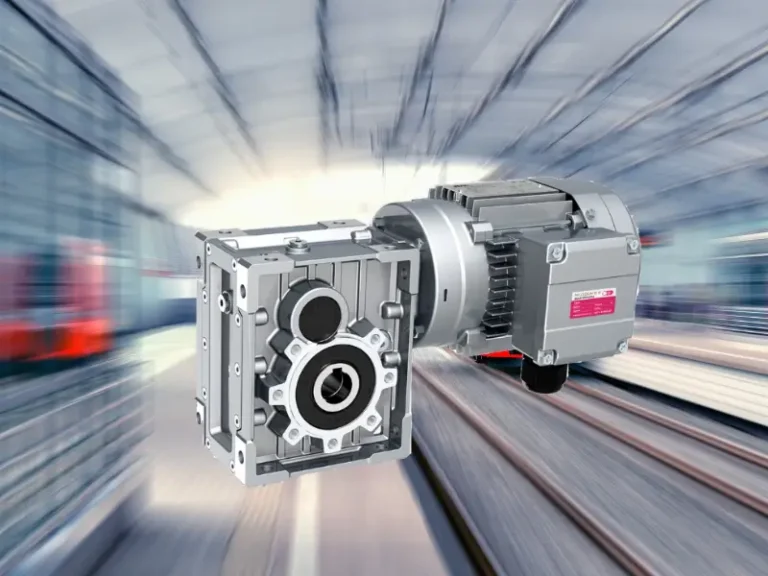
In these cases, a catalog gear reducer (worm, helical, bevel, or planetary) bolted directly to a standard motor is:
- Faster to select
- Easier to size
- More cost-effective
- Easier to maintain
There is simply no technical advantage to using a complex gearbox here.
3. Fixed Ratio, No Mechanical Shifting Required
If the machine operates at:
- One fixed speed
- Or a small range of speeds controlled electrically (via VFD or servo drive)
…then mechanical shifting is unnecessary.
You select:
- One reduction ratio (e.g., 5:1, 10:1, 40:1)
- Leave it fixed for the life of the machine
Speed adjustments, if needed, are handled by:
- Variable frequency drives (VFDs)
- Servo controllers
This approach is simpler, more reliable, and far more common in modern industrial systems.
4. You Want a Compact, Integrated Drive Package
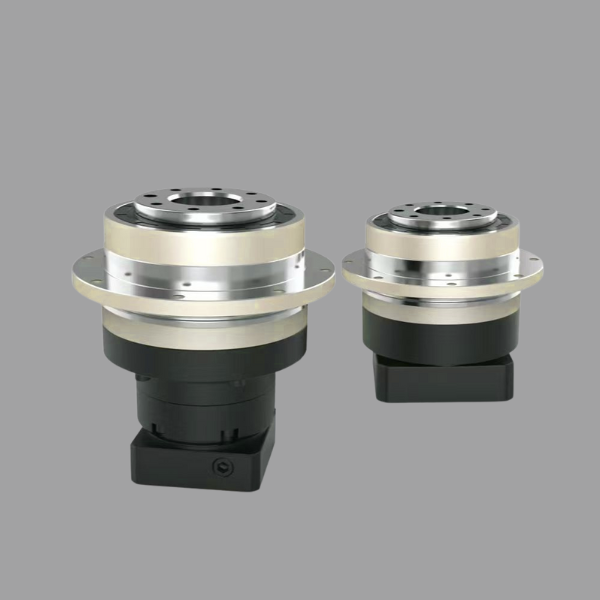
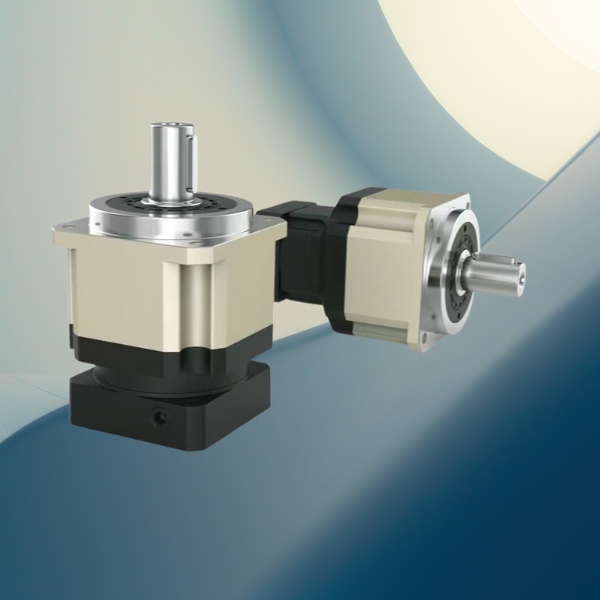
Gear reducers are designed as compact, standardized units that integrate easily into machines.
Most reducers offer:
- Motor input flanges (IEC, NEMA, or custom)
- Foot-mounted or flange-mounted housings
- Solid shaft or hollow bore outputs
- Torque arms, shrink discs, or keyways
For the same reduction ratio, a reducer—especially planetary or helical types—usually delivers:
- Higher torque density
- Smaller footprint
- Lower weight
Compared with a custom multi-stage gearbox, this results in cleaner machine layouts and easier installation.
5. Budget and Simplicity Matter More Than Flexibility
From a cost and project-management perspective, reducers have clear advantages:
- Off-the-shelf ratios cover most applications
- Engineering time is minimal
- Lead times are shorter
- Maintenance is simpler
A general gearbox becomes attractive only when flexibility is truly required. If flexibility is not needed, it becomes an unnecessary cost and risk.
When a Broader Gearbox Is More Appropriate
While reducers dominate industrial drives, there are cases where a general gearbox is the correct choice.
Choose a Gearbox When:
- Multiple gear ratios are required
- Mechanical shifting is necessary
- Forward/reverse logic is built into the transmission
- Speed increase is required (e.g., turbine to generator)
- Power must be split or combined between shafts
- The layout is highly specialized and non-standard
Examples include:
- Automotive transmissions
- Wind turbine gearboxes
- Marine propulsion systems
- Specialized test rigs
In these cases, the additional complexity of a gearbox is justified.
Reducer vs. Gearbox: A Practical Comparison
| Requirement | Gear Reducer | General Gearbox |
|---|---|---|
| Fixed speed reduction | ✔ Ideal | ✔ Possible |
| Speed increase | ✖ No | ✔ Yes |
| Multi-speed operation | ✖ No | ✔ Yes |
| Compact size | ✔ Excellent | ◐ Depends |
| Cost efficiency | ✔ High | ◐ Lower |
| Motor-driven machines | ✔ Best choice | ◐ Overkill |
| Complex kinematics | ✖ No | ✔ Yes |
Why Manufacturers Prefer Gear Reducers
From a manufacturer’s point of view, reducers provide:
- Predictable performance
- Standardized quality control
- Easier OEM integration
- Lower failure rates in continuous duty
This is why most industrial equipment suppliers design their machines around reducers, not general gearboxes.
As a professional transmission manufacturer, NUODUN focuses heavily on reducer-based solutions because they solve real industrial problems with the best balance of performance, reliability, and cost.
OEM Perspective: Custom Reducers vs. Standard Gearboxes
In many OEM projects, a standard catalog reducer is close—but not perfect.
Typical OEM needs include:
- Non-standard reduction ratios
- Custom motor flanges
- Special mounting orientations
- Higher torque margins
- Space-constrained designs
Instead of moving to a complex gearbox, OEMs often achieve better results by customizing a reducer.
NUODUN supports OEM solutions by offering:
- Customized reducer ratios
- Integrated motor-reducer designs
- Application-specific torque and lifespan optimization
- Faster development cycles than custom gearbox projects
Frequently Asked Questions (FAQ)
Q1: Is a gear reducer always cheaper than a gearbox?
In most fixed-ratio applications, yes. Reducers are simpler, standardized, and easier to manufacture, which keeps costs lower.
Q2: Can a gearbox replace a reducer?
Technically yes, but it is usually inefficient and unnecessarily complex if only speed reduction is required.
Q3: Can reducers change direction like gearboxes?
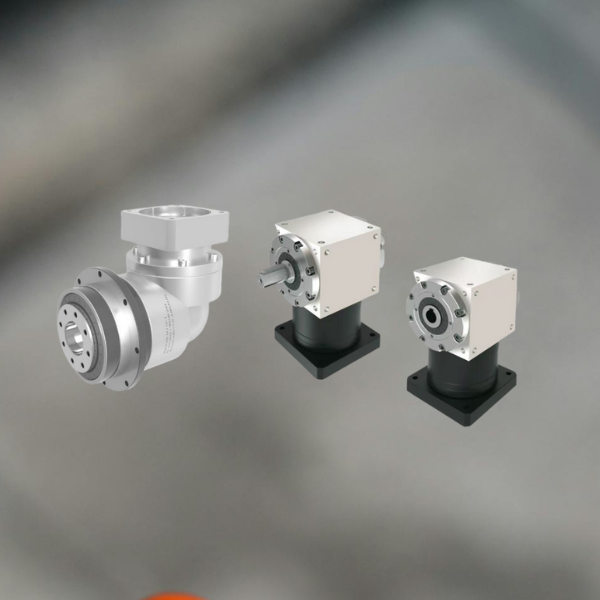
Some reducers (such as bevel or helical-bevel reducers) can change direction, but their main role remains speed reduction and torque increase.
Q4: Are planetary gear reducers considered gearboxes?
From a classification standpoint, yes. Functionally, they are reducers because they are optimized for fixed speed reduction and torque multiplication.
Q5: Does NUODUN support OEM gear reducer customization?
Yes. NUODUN specializes in OEM and ODM reducer solutions, tailored to specific motors, loads, and installation constraints.
Final Rule of Thumb
If your requirement can be summarized as:
“Match a motor to a load with one fixed reduction and more torque.”
Choose a gear reducer.
If your requirement involves:
- Multiple speeds
- Speed increase
- Direction logic
- Power splitting
You are in gearbox territory.
Work with a Transmission Specialist
If you are designing industrial equipment and need:
- A compact, high-torque reducer
- OEM customization
- Reliable, cost-effective transmission solutions
NUODUN is a professional transmission equipment manufacturer offering gear reducers and OEM drive solutions engineered for real industrial applications.
Contact NUODUN today to discuss your application, request technical support, or develop a customized reducer solution for your machine.