whatsapp:+86 13622680352



Planetary Reducers vs Helical Gearboxes: Which Should You Choose?
Introduction: Two Popular Gear Solutions, Very Different Strengths
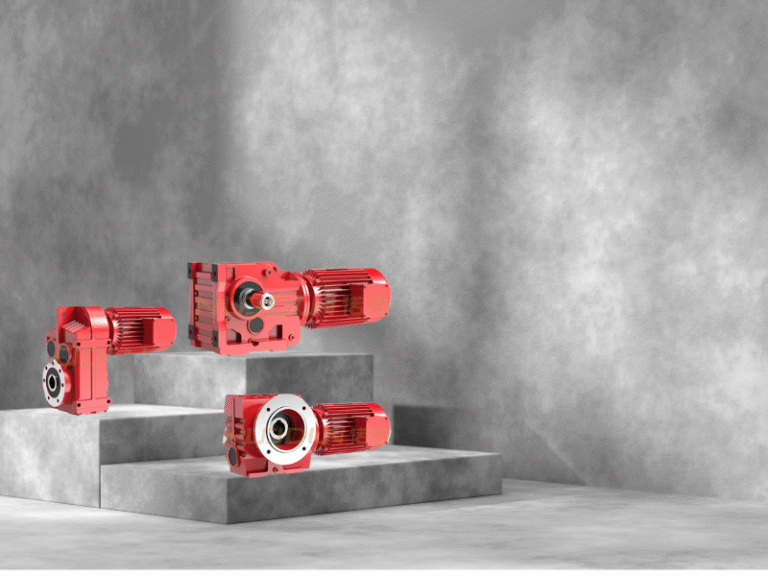
Planetary reducers and helical (parallel-shaft) gearboxes are two of the most widely used transmission solutions in industrial machinery. On the surface, both can reduce speed and increase torque. In practice, however, they are designed around very different mechanical principles, leading to clear differences in performance, size, stiffness, precision, noise behavior, and cost.
Understanding these differences is critical for engineers, system integrators, and OEM buyers. Selecting the wrong type can result in oversized machines, unnecessary cost, or insufficient precision.
This article explains how planetary reducers differ from helical gearboxes, when each is the better choice, and how manufacturers like NUODUN approach selection and OEM customization.
1. Internal Structure and Shaft Layout
Planetary Reducer: Coaxial, Load-Sharing Design
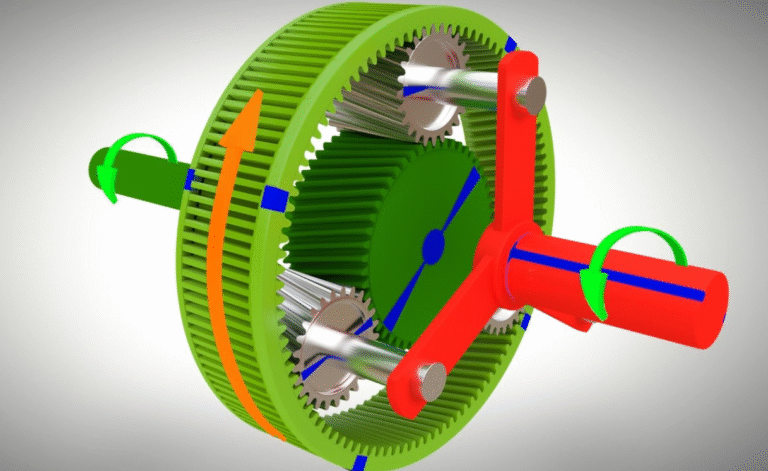
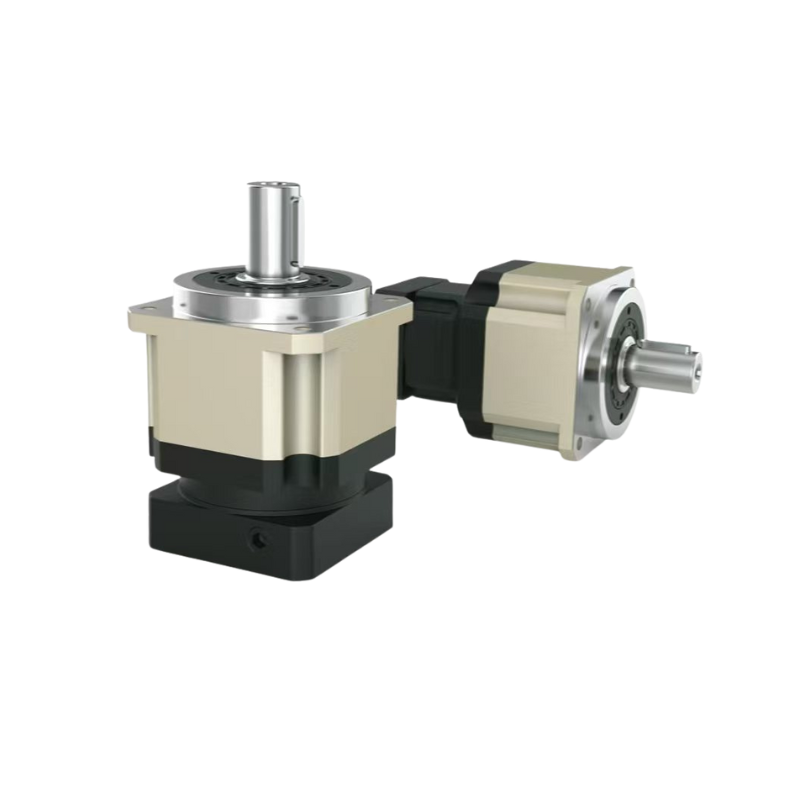
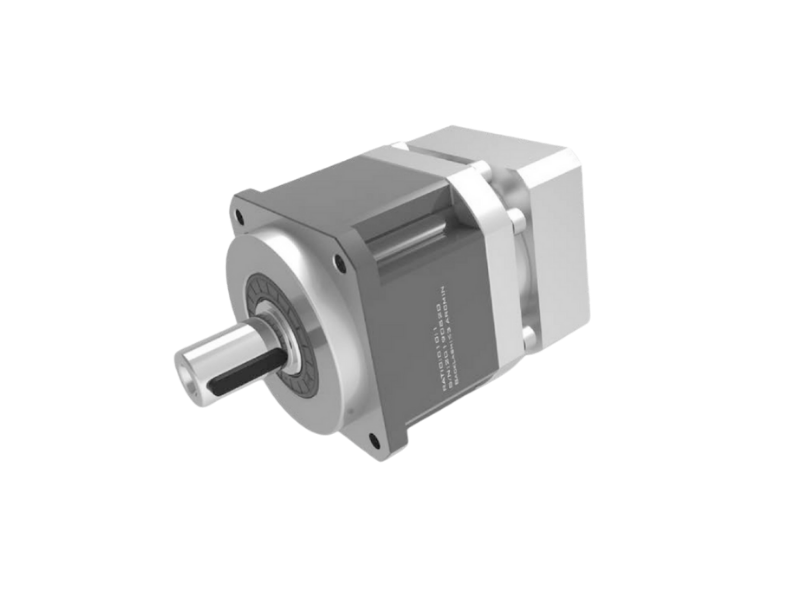
A planetary reducer uses a sun gear, multiple planet gears, a planet carrier, and an internal ring gear. The input and output shafts are usually coaxial, meaning they lie on the same centerline.
Key structural characteristics:
- Multiple planet gears mesh simultaneously
- Load is shared among several gear teeth at the same time
- Very compact, symmetric force distribution
This load-sharing principle allows planetary reducers to transmit very high torque relative to their size.
Helical Gearbox: Parallel-Shaft Power Flow
A helical gearbox typically consists of:
- One gear pair per stage
- Two or more parallel shafts
- Power flowing sequentially from one shaft to the next
At each stage, the torque is primarily carried by one meshing gear pair, rather than being distributed across multiple gears.
This simpler structure is robust, proven, and easy to manufacture, but it limits torque density compared to planetary designs.
2. Torque Density, Size, and Torsional Stiffness
Planetary Reducers: Maximum Torque in Minimum Space
One of the defining advantages of planetary reducers is their exceptionally high torque density.
Because several planet gears share the load:
- Torque capacity is much higher for a given gearbox size
- The reducer can be smaller and lighter
- Shaft deflection is minimized
Planetary reducers also offer high torsional stiffness, which means:
- Less elastic twist under load
- Better control accuracy
- Improved dynamic response
This makes them ideal for servo drives, robotics, AGVs, CNC axes, and precision automation.
Helical Gearboxes: Larger, Heavier for the Same Torque
For the same output torque:
- A helical gearbox is typically larger and heavier
- Torque is limited by a single gear mesh per stage
While stiffness and backlash are perfectly acceptable for most industrial tasks, they are generally not optimized for high-precision motion control.
3. Precision, Backlash, and Motion Control Capability
Planetary Reducers: Precision-Focused Design
Planetary reducers are often available in:
- Low-backlash versions
- Preloaded gear designs
- Servo-grade configurations
Backlash values can be extremely low, which is essential for:
- Accurate positioning
- Repeatable motion
- Closed-loop servo systems
This is why planetary reducers dominate in robot joints, pick-and-place systems, packaging machines, and precision automation.
Helical Gearboxes: Industrial Accuracy, Not Servo Precision
Helical gearboxes are designed primarily for:
- Power transmission
- Continuous duty operation
Their backlash and stiffness are suitable for conveyors, mixers, pumps, and general machinery, but they are not optimized for high-precision servo positioning.
4. Smoothness, Noise, and Efficiency
Helical Gearboxes: Quiet and Smooth Operation
Helical gears engage gradually due to their angled teeth, which results in:
- Very smooth power transmission
- Low vibration
- Low operating noise
This makes helical gearboxes particularly attractive for:
- Noise-sensitive environments
- Long-running industrial equipment
- Facilities with human operators nearby
Efficiency is also excellent, contributing to lower energy consumption.
Planetary Reducers: High Efficiency, Slightly Higher Noise
Planetary reducers also offer high efficiency, often around 95–97% per stage. However:
- More moving parts
- Multiple gear meshes
These factors can make them slightly noisier than a high-quality helical gearbox, especially at higher speeds.
In most automation applications, this noise difference is acceptable or negligible compared to the performance benefits.
5. Cost, Complexity, and Maintenance
Planetary Reducers: Higher Performance, Higher Cost
Planetary reducers require:
- Tight manufacturing tolerances
- Precise gear geometry
- More complex assembly
As a result:
- Initial cost is generally higher
- Assembly and servicing require more expertise
However, in precision or space-limited applications, the performance gains often justify the investment.
Helical Gearboxes: Cost-Effective and Easy to Service
Helical gearboxes are:
- Mechanically simpler
- Easier to understand and maintain
- More economical for moderate torque levels
For many industrial machines, they offer the best balance of performance, durability, and cost.
6. Typical Application Differences
Planetary Reducers Are Preferred When:
- Space is limited but torque demand is high
- Low backlash and high stiffness are critical
- Precise positioning and dynamic response matter
Typical applications:
- Industrial robots
- CNC machine axes
- AGVs and mobile robots
- Packaging and labeling machines
- Servo-driven automation systems
Helical Gearboxes Are Preferred When:
- Robust, economical power transmission is needed
- Noise reduction is important
- Space is not extremely constrained
Typical applications:
- Conveyors
- Mixers and agitators
- Pumps and fans
- General material handling equipment
7. Selection Rule of Thumb
A simple engineering rule helps clarify the choice:
- Choose a planetary reducer when you need maximum torque in minimum space with high precision and stiffness.
- Choose a helical gearbox when you need a quiet, efficient, cost-effective workhorse for general industrial speed reduction.
8. OEM Perspective: Customization Makes the Difference
In real projects, the choice is not always purely planetary or helical. OEM requirements often include:
- Non-standard motor interfaces
- Special reduction ratios
- Space constraints
- Noise limits
- Cost targets
As a transmission equipment manufacturer, NUODUN supports OEM and ODM customization for both planetary reducers and helical gearboxes, allowing customers to:
- Optimize size and torque
- Match specific motors
- Balance precision and budget
- Shorten development cycles
Rather than forcing a standard solution, customization ensures the gearbox fits the actual application, not just the catalog.
Frequently Asked Questions (FAQ)
Q1: Can a helical gearbox replace a planetary reducer?
In principle, yes—but it will usually be larger and less precise for the same torque and backlash requirements.
Q2: Are planetary reducers always better than helical gearboxes?
No. Planetary reducers excel in compactness and precision, but helical gearboxes are often better for cost-sensitive, noise-critical, general industrial applications.
Q3: Which is more efficient?
Both are highly efficient. Helical gearboxes are extremely efficient at moderate ratios, while planetary reducers maintain high efficiency even at higher torque density.
Q4: Which is easier to maintain?
Helical gearboxes are generally simpler to service due to their straightforward structure.
Q5: Does NUODUN offer OEM customization for both types?
Yes. NUODUN provides OEM and ODM solutions for planetary reducers and helical gearboxes, tailored to torque, precision, space, and cost requirements.
Final Summary
Planetary reducers and helical gearboxes are not competitors—they are tools designed for different priorities.
- Planetary reducers prioritize precision, compactness, and torque density
- Helical gearboxes prioritize smoothness, durability, and cost efficiency
Choosing correctly leads to better machine performance, longer service life, and lower total system cost.
Choose the Right Transmission with NUODUN
If you are designing or upgrading industrial equipment and need:
- Planetary reducers for precision automation
- Helical gearboxes for reliable industrial drives
- OEM-level customization and engineering support
NUODUN is a professional transmission equipment manufacturer offering planetary reducers, helical gearboxes, and customized drive solutions for global OEM customers.
Contact NUODUN today to discuss your application and find the optimal transmission solution for your machine.