whatsapp:+86 13622680352



How to Choose: Gear Reducer or Gearbox?
Introduction: Why the Difference Matters in Industrial Power Transmission
In industrial motion control and mechanical power transmission, the terms gear reducer and gearbox are often used interchangeably. While they are closely related, they are not identical. Misunderstanding the difference can lead to incorrect equipment selection, reduced efficiency, higher costs, or premature failure.
For engineers, system integrators, and OEM buyers, understanding the functional, structural, and application-level differences between a gear reducer and a gearbox is essential for designing reliable and cost-effective machinery.
This article provides a clear, engineering-level explanation of the differences between a gear reducer and a gearbox, explains when to use each, and offers practical selection guidance from an industrial manufacturer’s perspective.
Core Definitions: Gearbox vs. Gear Reducer
What Is a Gearbox?
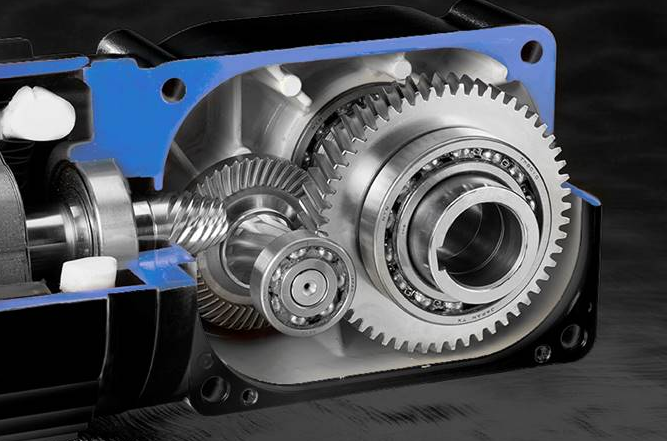
A gearbox is a general mechanical transmission system composed of gears, shafts, bearings, seals, and a housing. Its purpose is to modify mechanical power in one or more of the following ways:
- Change rotational speed
- Increase or decrease torque
- Change direction of rotation
- Split or combine power between multiple shafts
Gearboxes can be simple or highly complex, depending on the application.
Typical examples include:
- Automotive transmissions
- Marine gearboxes
- Wind turbine gearboxes
- Industrial multi-speed gearboxes
In short, a gearbox is a broad category covering many types of gear-based power transmission systems.
What Is a Gear Reducer?
A gear reducer (also called a speed reducer) is a specific type of gearbox whose primary and sole purpose is to:
- Reduce input speed
- Increase output torque
In practical industrial usage, a gear reducer is usually:
- Fixed-ratio
- Compact
- Directly mounted to a motor
- Optimized for torque transmission and efficiency
Typical reducer types include:
- Helical gear reducers
- Worm gear reducers
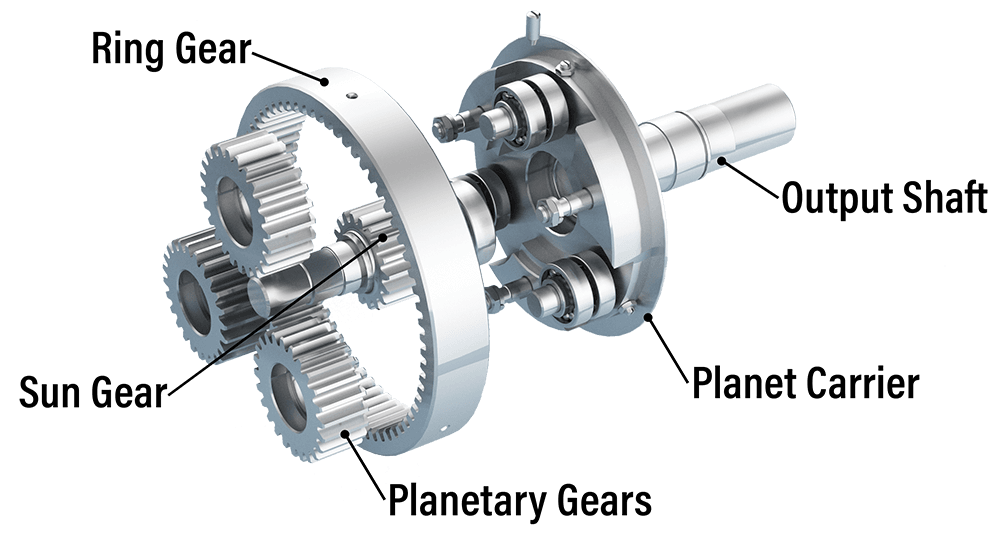
- Planetary gear reducers
- Bevel and helical-bevel reducers
Key takeaway:
Every gear reducer is a gearbox, but not every gearbox is a gear reducer.
Key Differences Between a Gear Reducer and a Gearbox
1. Primary Function
Gearbox
- Can reduce speed
- Can increase speed
- Can change direction
- Can split or merge power
- Often supports multiple operating modes
Gear Reducer
- Always reduces speed
- Always increases torque
- Never used as a speed increaser
- Dedicated to torque multiplication
If speed increase or multi-speed shifting is required, a gear reducer is not suitable.
2. Design Complexity
Gearbox Design Characteristics
- May include multiple gear stages
- May incorporate clutches, synchronizers, or shifting mechanisms
- Often larger and mechanically more complex
- Designed for flexibility and control
Gear Reducer Design Characteristics
- Typically single-stage or multi-stage fixed gearing
- No shifting components
- Optimized tooth geometry for load capacity
- Mechanically simpler and more robust
Because of this simplicity, reducers often deliver higher reliability in continuous-duty industrial environments.
3. Application Focus
Typical Gearbox Applications
- Vehicles and mobile equipment
- Aerospace systems
- Power generation
- Heavy machinery requiring variable speeds
- Systems with forward/reverse switching
Typical Gear Reducer Applications
- Conveyors
- Mixers and agitators
- Industrial automation systems
- Robotics and AGVs
- Packaging machines
- Material handling equipment
In most factory automation scenarios, motors run at high speed, while the load requires low speed and high torque—making gear reducers the natural choice.
Size, Efficiency, and Cost Considerations
Compactness
Gear reducers are generally more compact for the same reduction ratio because they eliminate unnecessary components.
Efficiency
- Reducers often achieve higher mechanical efficiency due to fewer power-loss paths
- Gearboxes with multiple stages and auxiliaries may have slightly lower efficiency
Cost
- Gear reducers are usually more cost-effective for fixed-ratio applications
- General gearboxes cost more due to complexity and broader functionality
Gear Reducers in Industrial Systems: Why They Dominate
In modern industrial equipment, motors are designed to operate efficiently at high speeds. Loads, however, often require:
- Lower operating speeds
- Higher torque
- Precise motion control
A gear reducer acts as the mechanical bridge between motor and load, allowing engineers to:
- Downsize motors
- Improve system efficiency
- Reduce energy consumption
- Increase service life
This is why gear reducers are standard components in industrial drive systems.
Common Types of Gear Reducers and Their Roles

Planetary Gear Reducers
- High torque density
- Compact design
- Low backlash options
- Ideal for robotics, automation, servo systems
Worm Gear Reducers
- High reduction ratios
- Self-locking capability
- Compact at low speeds
- Common in lifting and positioning systems
Helical Gear Reducers
- High efficiency
- Low noise
- Long service life
- Widely used in conveyors and process equipment
Bevel / Helical-Bevel Reducers
- Change direction (usually 90°)
- High load capacity
- Used in complex layouts
How to Choose: Gear Reducer or Gearbox?
Choose a Gear Reducer If:
- You have a motor that runs too fast
- You need higher torque at the output
- Speed reduction is fixed
- Compact size and efficiency matter
- Cost control is important
Choose a Gearbox If:
- You need multiple speeds
- You require speed increase
- Directional control is needed
- Power must be split or combined
- The system requires dynamic control
OEM Perspective: Why Customization Matters
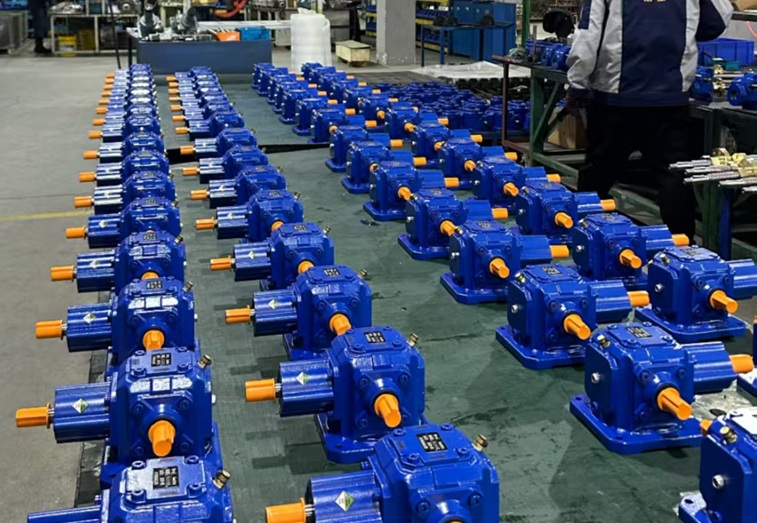
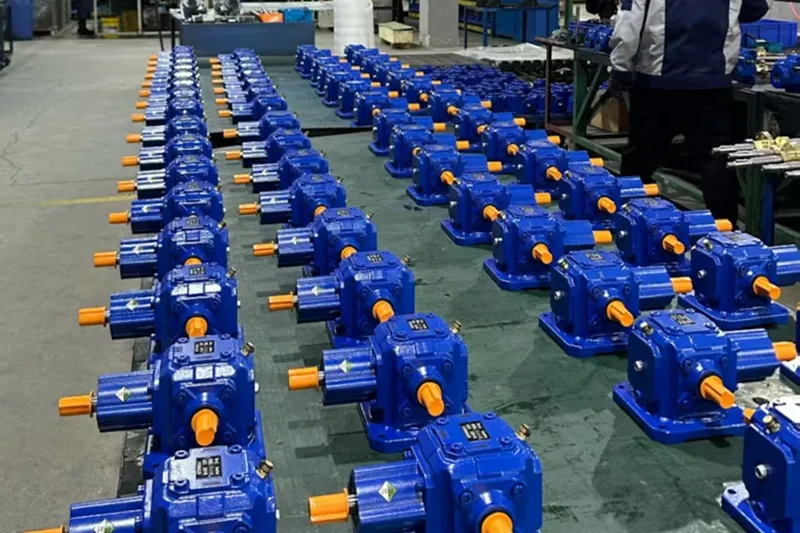
As an industrial transmission manufacturer, NUODUN sees that many customers do not need a “generic gearbox” but a tailored reducer solution.
Through OEM customization, NUODUN supports:
- Custom reduction ratios
- Non-standard torque ratings
- Motor-specific input flanges
- Special mounting configurations
- Compact integrated drive solutions
This approach reduces system complexity, improves reliability, and shortens development cycles for equipment manufacturers.
Common FAQs (FQA)
Q1: Is a gear reducer more efficient than a gearbox?
In fixed-ratio speed reduction applications, yes. Gear reducers are optimized for efficiency and usually have fewer mechanical losses.
Q2: Can a gear reducer change direction like a gearbox?
Some reducers (e.g., bevel reducers) can change direction, but their primary function remains speed reduction and torque increase.
Q3: Are planetary gear reducers considered gearboxes?
Yes. Technically, they are gearboxes, but functionally they are gear reducers due to their speed-reduction purpose.
Q4: Can I use a gearbox as a reducer?
Yes, but it is often inefficient and unnecessarily complex if only speed reduction is required.
Q5: Does NUODUN support OEM gear reducer customization?
Yes. NUODUN specializes in OEM and ODM transmission solutions, providing customized reducers designed for specific motors, loads, and applications.
Final Summary: The Simple Rule to Remember
- Every gear reducer is a gearbox
- Not every gearbox is a gear reducer
A gear reducer is the specialist—focused, efficient, compact, and torque-oriented.
A gearbox is the generalist—flexible, complex, and multifunctional.
Choosing correctly ensures better performance, lower cost, and longer service life.
Work with a Transmission Specialist
If you are designing or upgrading industrial equipment and need:
- A compact gear reducer
- OEM customization
- High torque, high reliability transmission solutions
NUODUN provides factory-direct gear reducers and gearboxes, engineered for real-world industrial performance.
👉Contact NUODUN today to discuss your application, request technical support, or develop a customized OEM transmission solution.