whatsapp:+86 13622680352



How to Choose Ball Screw vs Trapezoidal Screw by Duty Cycle
When engineers debate ball screw versus trapezoidal (Acme) screw, the discussion often starts with efficiency or cost. In real industrial systems, the most reliable way to make the decision is simpler: look at the duty cycle. How often does the actuator move? How fast? And how long does it keep moving before it rests?
Duty cycle is the “stress test” for a screw mechanism because it directly drives friction losses, heat rise, wear rate, and maintenance intervals. If the machine moves frequently, moves quickly, or runs for long periods without cooling time, you want the mechanical efficiency and lower heat generation of a ball screw. If the system moves slowly, only occasionally, and must hold heavy loads safely without back-driving, a trapezoidal screw is usually the better engineering choice.
NUODUN is a professional manufacturer specializing in drive systems, power transmission, and linear motion actuator components. This article provides a practical selection framework you can use for screw jacks, linear actuators, and lifting mechanisms—whether you are designing a new machine or upgrading an existing system.
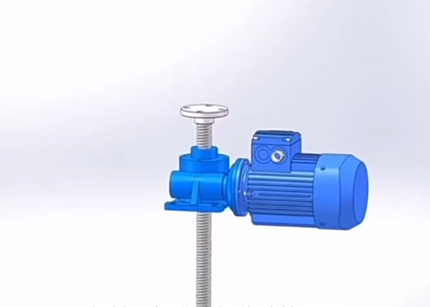
Why Duty Cycle Should Lead the Decision
Duty cycle describes the percentage of time within a repeating cycle that the screw is actively moving under load. In other words, it answers: “Out of every minute or hour, how much time is the actuator actually working?”
That single metric correlates strongly with:
- Heat generation at the screw–nut interface
- Lubrication breakdown and service life
- Motor torque demand and energy consumption
- Long-term repeatability and positioning drift
If you select a trapezoidal screw for a high-duty application, the system may work initially but gradually develop rising temperature, faster wear, and unstable performance. If you select a ball screw for an application that requires self-locking without a brake, you may face safety and compliance concerns. The duty cycle lens helps avoid both pitfalls.
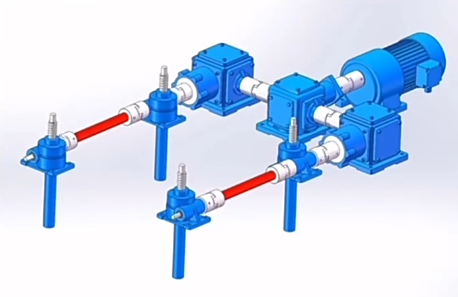
Key Concepts in Plain Terms
Before applying decision rules, align on a few definitions used in design reviews and procurement discussions.
Duty Cycle
Duty cycle is the ratio of motion time to total cycle time.
Example: if a lift moves for 15 seconds and rests for 45 seconds, the duty cycle is 15 / 60 = 25%.
Machine Screw vs Ball Screw
- Trapezoidal/Acme screw: sliding friction between screw and nut
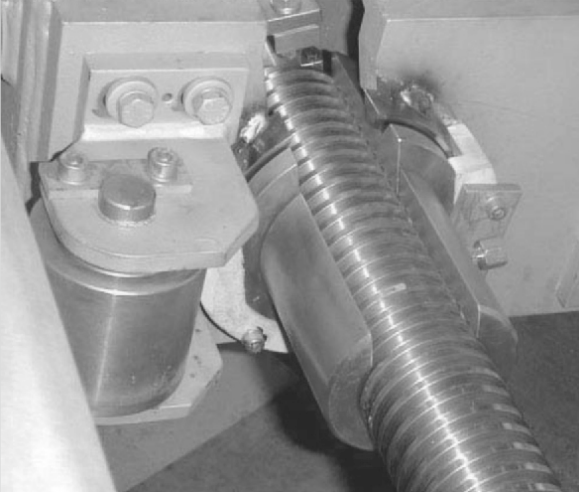
- Ball screw: rolling friction using recirculating balls between screw and nut
Sliding friction is robust and tolerant but generates more heat. Rolling friction is efficient and cooler but typically needs more protection and is not self-locking.
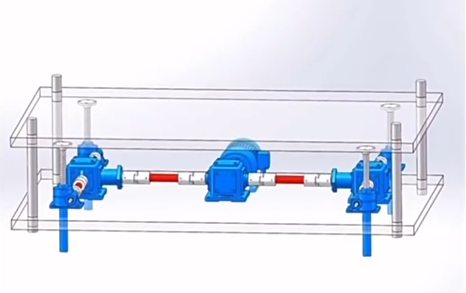
Efficiency, Heat, and What They Mean in Real Machines
Trapezoidal (Acme) Screw: Sliding Friction
Trapezoidal screws operate with sliding contact. Practical implications:
- Lower efficiency, commonly in the range of roughly 30–60% depending on design, lubrication, and load
- Higher friction means higher heat generation at the same speed and load
- Duty cycle capability is typically lower because heat must dissipate during rest periods
Typical fit:
- Low speed and intermittent motion
- Heavy loads and shock tolerance
- Applications where self-locking or resistance to back-driving is important
Practical industry guidance often places machine-screw jacks in a lower duty category, commonly around 20–25% for many designs, although the correct limit depends on load, speed, lubrication, and housing thermal capacity.
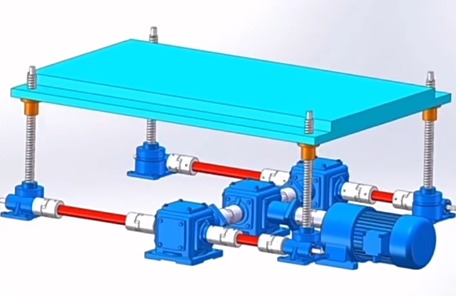
Ball Screw: Rolling Friction
Ball screws convert sliding friction into rolling friction. Practical implications:
- Higher efficiency, often in the range of roughly 70–95% (many applications are close to 90%)
- Lower friction reduces heat rise, enabling higher duty cycles
- Better suitability for higher speeds and frequent reciprocating motion
- More predictable performance in automation contexts
Typical fit:
- Medium to high speed, frequent cycles
- Servo or stepper-driven systems
- Higher duty cycle operation where heat and wear must be controlled
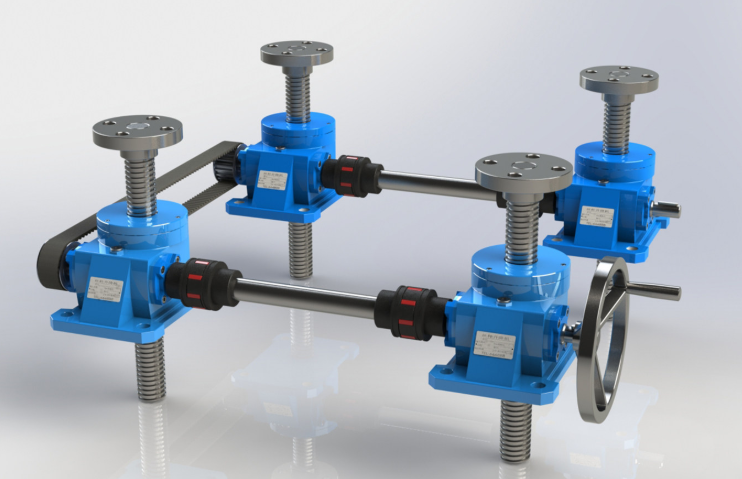
In screw jack systems, ball screw variants typically tolerate higher duty cycles than trapezoidal designs, and high-efficiency gear transmissions can push duty capability even further when combined with the right lubrication and cooling strategy.
A Practical Duty Cycle Framework You Can Reuse
The most useful way to decide is to combine two indicators:
- Motion time as a percentage of each cycle
- Total motion time per hour (how much the system actually runs)
Below is a selection framework used in many industrial design reviews.
Low Duty Cycle: Occasional Adjustment and Infrequent Motion
Common profile:
- Very short movements (seconds) followed by long idle time
- Adjustments are occasional rather than continuous
Typical applications:
- Mold height adjustment
- Occasional alignment and centering
- Maintenance lifting and inspection positioning
- Gates, dampers, baffles adjusted occasionally
Recommended choice: Trapezoidal/Acme screw
Why it fits:
- Self-locking tendency helps hold load without a brake
- Heat rise is minimal because motion time is limited
- Lower system cost and simpler integration
- Robust against shock and rough operating conditions
Rule of thumb:
- Often <10–20% duty cycle, with low speed requirements
- Prioritize holding safety, shock tolerance, and cost control
Medium Duty Cycle: Periodic Motion with Cooling Time
Common profile:
- Each cycle includes a meaningful lift/push/pull segment (seconds to tens of seconds)
- System repeats many times per hour, but includes rest windows for cooling
Typical applications:
- Workstation lift tables with intermittent movement
- Assembly line height changes at defined intervals
- Handling fixtures that reposition periodically
Recommended choice: Conditional
- If total motion time stays comfortably below ~20–25%, trapezoidal can be acceptable, but only after checking temperature rise and lubrication strategy.
- If the duty cycle approaches or exceeds ~25–35%, a ball screw is typically the safer selection for efficiency, heat control, and wear life.
Engineering note:
When duty cycle sits in the middle band, the “correct” answer depends on speed, load, and thermal mass. If performance consistency matters, ball screw is often the lower-risk option.
High Duty Cycle: Near-Continuous Motion or Frequent Reciprocation
Common profile:
- The system moves most of the time within each hour
- Frequent starts/stops or continuous cycling
- Often paired with servo control and higher speeds
Typical applications:
- Automated production lines running continuously
- High-speed positioning modules
- Continuous reciprocating lift or traverse mechanisms
Recommended choice: Ball screw
Why it fits:
- High efficiency reduces motor torque demand and energy consumption
- Lower friction reduces heat, wear, and lubricant stress
- Better for predictable lifecycle and maintenance planning
- Strong compatibility with servo/stepper control for precise positioning
Rule of thumb:
- If duty cycle is >35–50% or trends toward continuous operation, ball screw becomes the default engineering choice. In very high duty environments (including cases approaching 80%+), ball screw is usually the only practical solution unless the system is redesigned around alternative actuation principles.
Decision Factors Beyond Duty Cycle
Duty cycle should lead, but it is not the only factor. Use the following checks to avoid selecting the “right” screw type for the wrong reason.
Self-Locking and Safety Requirements
- Trapezoidal screws often provide self-locking or strong resistance to back-driving, depending on lead angle, friction, lubrication, and load direction. This is valuable for vertical lifts where the load must hold position during power loss.
- Ball screws are generally not self-locking. If a vertical load must be held when power is off, specify a brake motor, a mechanical brake, or a safety mechanism.
Practical guidance:
If your risk analysis requires power-off holding as a primary safety function, trapezoidal is often the most straightforward path. If you need ball screw performance, design holding safety intentionally—do not treat it as an optional add-on.
Speed and Responsiveness
- High linear speed and fast response favor ball screws due to lower friction and better dynamic behavior.
- Low speed, manual adjustment, or simple motor drive often suits trapezoidal screws without introducing unnecessary cost.
Load, Shock, and Contamination
- Trapezoidal screws are often preferred for heavy loads and shock because of robust thread geometry and tolerance to imperfect conditions.
- Ball screws can handle high loads but may be more sensitive to shock, contamination, and lubrication quality. Protection (covers, seals, bellows) and correct lubrication become more critical.
Cost and Total Cost of Ownership
Upfront cost is only part of the decision:
- Trapezoidal: lower initial cost, good for low duty operation
- Ball screw: higher initial cost, but often lower operating cost in high duty applications due to reduced energy use and longer wear life
In high duty systems, the energy and maintenance savings can outweigh the purchase price difference.
A Simple Decision Rule You Can Apply Immediately
Use this field-friendly rule when you need a quick direction before detailed calculations.
Choose Trapezoidal (Machine/Acme) Screw When
- The mechanism only adjusts position occasionally
- Motion time per hour is low, typically under ~20% duty
- Speed is not high
- The priority is heavy load holding, self-locking behavior, safety simplicity, and cost control
Choose Ball Screw When
- The mechanism starts/stops frequently or runs near continuously
- Duty cycle is ≥ ~25–35%, especially with repeated cycles
- Higher speed, precision positioning, or servo control is required
- You want high efficiency, low heat, and predictable life under repetitive operation
- You can implement a brake/holding strategy if power-off holding is required
Selection Checklist for Engineering and Procurement
Use this checklist to align the design team, maintenance team, and procurement team.
Duty Profile
- Motion time per cycle (seconds)
- Cycle time (seconds)
- Duty cycle (%)
- Cycles per hour/day
- Any continuous run periods
Performance Requirements
- Required speed (mm/s or mm/min)
- Positioning accuracy and repeatability target
- Synchronization requirement (if multi-axis or multi-jack)
Safety and Holding
- Must hold position during power-off?
- Brake allowed/required?
- Safety nut or secondary holding required?
Environment and Protection
- Dust/water/corrosion exposure
- Lubrication strategy (manual vs automatic)
- Cover/bellows requirement
Decision Output
- Screw type chosen (trapezoidal vs ball screw)
- Holding method chosen (self-locking vs brake/holding system)
- Protection and maintenance plan defined
Frequently Asked Questions
What duty cycle is “too high” for a trapezoidal screw?
There is no single universal number because load, speed, lubrication, and housing thermal capacity matter. In many practical screw jack applications, trapezoidal designs are used in intermittent duty ranges and may be kept around a lower duty band to control heat and wear. When duty cycle approaches the mid-to-high band and motion becomes frequent, ball screw becomes the lower-risk option.
Can a trapezoidal screw be used in a frequent cycling application if we oversize it?
Oversizing can reduce stress and temperature rise, but it cannot eliminate the fundamental friction mechanism. If the actuator runs frequently and fast, friction heat and wear remain the dominant limitation. In those cases, a ball screw solution is usually more efficient and more predictable.
Why does a ball screw usually need a brake for vertical lifting?
Because ball screws are generally not self-locking. Under vertical load, the mechanism can back-drive if the motor is unpowered. A brake motor or mechanical brake is commonly used to ensure safe power-off holding.
Does “self-locking” always guarantee safety?
Self-locking is influenced by lead angle, friction, lubrication, and operating conditions. For critical applications, safety design typically includes limit switches, mechanical stops, safety nuts, and compliance with your risk assessment requirements—regardless of screw type.
Which option is better for servo control and accurate positioning?
Ball screw systems generally offer better efficiency and smoother motion under servo control, making them a common choice for automation lines that require frequent positioning and repeatable motion.
If you share your duty cycle and basic application data, NUODUN can recommend the most suitable screw type and screw jack configuration, including holding safety and protection options.
Provide:
- Load (max load and direction), stroke, and installation orientation
- Required speed and duty cycle (cycle time and motion time)
- Position holding requirement (self-locking vs brake)
- Accuracy and control method (manual, motor, servo)
- Environment (dust/water/corrosion) and expected maintenance approach
NUODUN, as a professional manufacturer focused on drive systems, power transmission, and linear motion actuator components, supports OEM and industrial users with application-based selection guidance, reliable configurations, and accessory recommendations to help your equipment run smoother, last longer, and cost less to maintain.