whatsapp:+86 13622680352



Common Faults and Treatment Methods of Planetary Gear Reducers for Roller Press Applications
Introduction
Planetary gear reducers are critical transmission components in roller press systems, widely used in cement grinding lines and other heavy-duty industrial applications. Operating under high load, strong vibration, and severe impact conditions, these reducers must deliver stable torque transmission while maintaining reliability over long operating cycles.
However, due to their compact structure and concentrated load distribution, planetary gear reducers are highly sensitive to lubrication conditions, installation accuracy, and component wear. Once failures occur—especially in bearings, hollow output shafts, or torque support systems—the consequences often include forced shutdowns, costly repairs, and production losses.
This article focuses on common faults and proven treatment methods for planetary gear reducers used in roller presses, with practical guidance drawn from field experience. It also outlines daily maintenance priorities and monitoring techniques to help operators extend equipment service life and reduce failure rates.
1. Bearing Failures in Planetary Gear Reducers
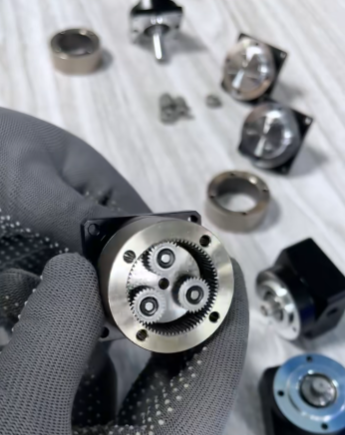
1.1 Operating Characteristics of Bearings in Roller Press Reducers
In roller press planetary gear reducers, bearings are subjected to:
- High radial loads
- Significant axial forces
- Strong shock and impact loads
- Continuous vibration under heavy-duty operation
As a result, bearing failure rates are relatively high compared with standard industrial gearboxes.
1.2 Common Bearing Failure Modes
Typical bearing damage includes:
- Fatigue spalling on raceways
- Cage deformation or fracture
- Overheating and discoloration
- Excessive clearance due to wear
- Seizure caused by lubrication failure
These faults often accelerate secondary damage to gears and shafts if not detected early.
1.3 Treatment and Prevention Methods
- Arrange professional inspection every 1–2 years to check bearing clearance and wear condition
- Replace bearings based on measured wear rather than waiting for failure
- Follow strict installation standards, including correct preload and alignment
- Use approved lubrication grades and maintain oil cleanliness
Proper bearing management significantly reduces catastrophic gearbox failures.
2. Hollow Output Shaft Faults and Solutions
The hollow output shaft directly connects the planetary gear reducer to the roller press shaft and plays a decisive role in torque transmission.
2.1 Adhesive Seizure Between Hollow Shaft and Roller Shaft
Cause
Improper installation can cause adhesive seizure between the hollow shaft bore and the roller shaft surface. In severe cases, dismantling requires destructive removal of the hollow shaft.
Treatment Method
- Clean mating surfaces thoroughly using 99% alcohol or acetone
- Ensure precise alignment between reducer output and roller shaft
- Push the reducer slowly and evenly into position
- Never strike the reducer with tools during installation
Standardized installation is essential to avoid irreversible damage.
2.2 Wear Due to Improper Shrink Disc Installation
Cause
If the shrink disc is improperly installed or bolts are inadequately tightened, relative movement occurs between the hollow shaft and roller shaft, leading to wear and asynchronous operation.
Treatment Method
- Ensure all mating surfaces are completely free of oil and contaminants
- Tighten shrink disc bolts using a calibrated torque wrench
- Follow a cross or circular tightening sequence, gradually increasing torque
- Perform multiple tightening cycles until specified torque is achieved
Correct shrink disc installation ensures reliable torque transmission and prevents shaft wear.
3. Torque Arm and Torque Plate Faults
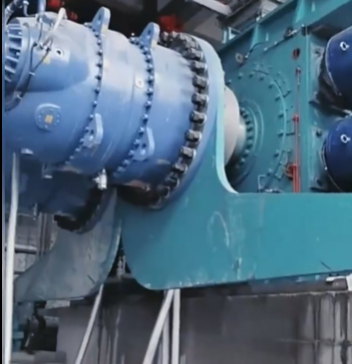
3.1 Common Faults
- Loose or fractured foundation bolts
- Damaged spherical joint bearings
- Structural design deficiencies in torque support systems
These issues often cause abnormal vibration and misalignment.
3.2 Treatment Methods
- Reinforce torque plate foundations
- Replace worn joint bearings promptly
- Improve torque arm design based on actual load distribution
Torque support structures may include L-type, suspended, or ground-mounted designs. Some original designs require optimization to meet real operating conditions.
4. Universal Coupling (Cardan Shaft) Failures
4.1 Common Causes
- Installation exceeding allowable swing angle
- Worn or damaged joint bearings
- Poor dynamic balance
These faults create unbalanced forces during operation, increasing vibration and bearing stress.
4.2 Treatment Methods
- Adjust motor centerline alignment
- Ensure coupling operates within standard angular limits
- Perform dynamic balancing tests
- Strengthen daily lubrication and inspection routines
5. Daily Maintenance Priorities and Monitoring Methods
Effective daily maintenance is the foundation of planetary gear reducer reliability.
5.1 Key Inspection Points
- Inspect magnetic drain plugs and oil return lines twice weekly for metal particles
- Monitor vibration, abnormal noise, and temperature trends
- Pay close attention to high-speed shaft temperature
If metal debris increases continuously, the reducer must be shut down immediately for inspection.
5.2 Lubrication and Temperature Monitoring
When abnormal temperature is detected:
- Check oil flow rate
- Inspect lubrication filters for blockage
- Verify motor–reducer alignment
- Inspect universal coupling vibration
- Check bearing clearance and seating condition
5.3 Digital Maintenance Records
Establish a complete equipment database covering:
- Installation records
- Operating parameters
- Maintenance history
- Spare parts specifications and inventory
- Replacement component data
Accurate lifecycle records allow faster fault diagnosis and reduce downtime during repairs.
6. Why Professional OEM Support Matters
Planetary gear reducers for roller presses are not standard products. Load conditions, installation structures, and operating environments vary significantly.
NUODUN, as a professional transmission equipment manufacturer, provides:
- OEM planetary gear reducer design
- Structural optimization based on site conditions
- High-load bearing and gear selection
- Technical support for installation and maintenance
OEM solutions ensure better compatibility, longer service life, and lower total ownership cost.
Frequently Asked Questions (FAQ)
Q1: How often should planetary gear reducer bearings be inspected?
Typically every 1–2 years under normal operation, or sooner in high-impact or high-vibration environments.
Q2: What is the most common cause of hollow shaft failure?
Improper installation and incorrect shrink disc tightening are the leading causes.
Q3: Why is metal debris monitoring important?
Metal particles indicate early-stage bearing or gear wear and allow intervention before catastrophic failure.
Q4: Can torque arm design affect reducer lifespan?
Yes. Poor torque support design increases vibration and accelerates internal wear.
Q5: Does OEM customization improve reliability?
OEM designs tailored to actual load and installation conditions significantly reduce failure rates.
Conclusion
Planetary gear reducers used in roller press systems operate under extreme mechanical stress. Bearing failures, hollow shaft damage, torque support issues, and coupling faults are common—but preventable—with proper installation, monitoring, and maintenance strategies.
By implementing standardized procedures and working with experienced manufacturers, operators can dramatically improve reducer reliability and production continuity.
If you are experiencing frequent failures or planning an upgrade of your roller press transmission system, NUODUN is ready to support you.
You May like: