whatsapp:+86 13622680352



Bevel Gear Ball Screw Jack Maintenance Guide: Practical Tips to Maximize Service Life and Precision
In high-speed, high-precision lifting systems, maintenance is not optional—it directly determines positioning accuracy, service life, and operational safety.
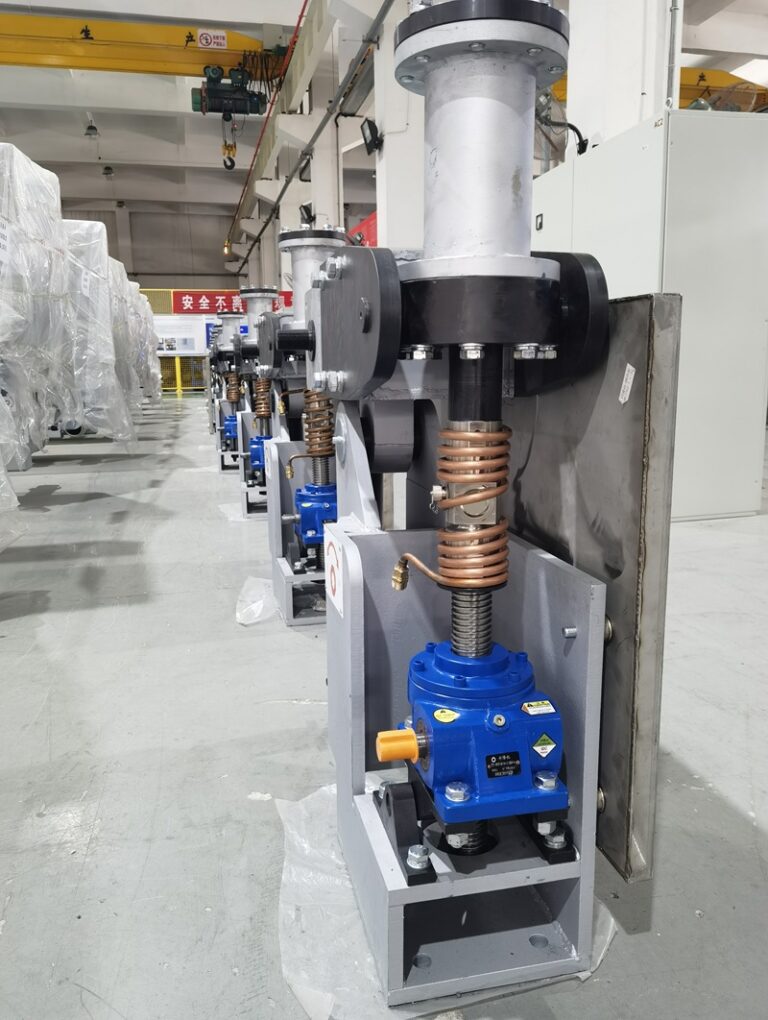
A bevel gear ball screw jack is designed for demanding applications such as synchronized lifting platforms, automation production lines, and industrial adjustment systems. However, its performance depends heavily on proper lubrication, alignment, load management, and environmental protection.
In practical engineering terms, maintenance can be summarized into five key principles:
- The gearbox must contain proper oil.
- The ball screw must be lubricated with grease.
- The system must remain aligned.
- The load must stay within rated limits.
- The environment must be clean and protected.
This guide provides a structured and field-tested maintenance checklist suitable for industrial operators, maintenance engineers, and OEM system integrators.
1. Lubrication: Gearbox Oil and Ball Screw Grease
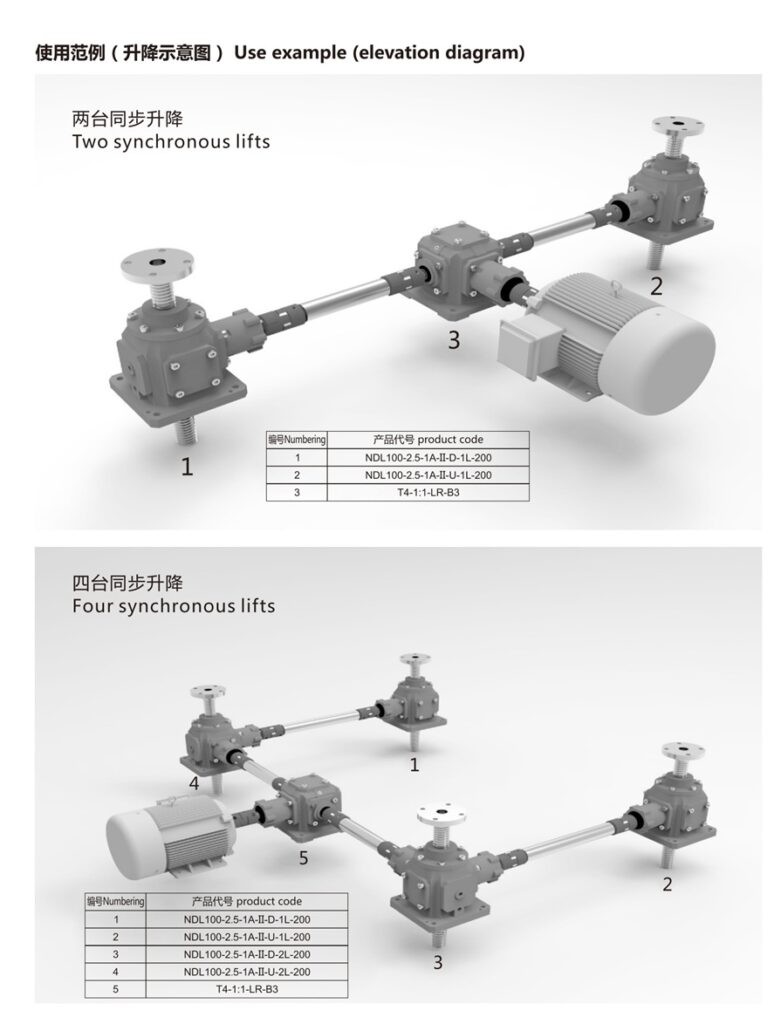
Lubrication is the single most critical maintenance factor for bevel gear ball screw jacks. Because the unit combines bevel gears and a precision ball screw mechanism, both require appropriate lubrication strategies.
Gearbox Lubrication (Bevel Gear Stage)
Most bevel gear ball screw jacks are filled with long-life lubricating oil before delivery. Under normal industrial conditions, they may operate for extended periods without oil replacement.
Routine Recommendations
- Regularly check oil level through inspection ports (if available).
- Inspect for leakage around oil seals and housing joints.
- If leakage is detected, repair seals before refilling to the specified oil level.
- Avoid overfilling, which may cause overheating.
Oil Replacement Intervals
In high-load or high-frequency applications:
- Replace gearbox oil approximately every 1,000 operating hours or every 5 years.
- Before refilling, completely drain and flush the gearbox to remove contamination.
- Always use lubricant grade recommended by the manufacturer.
Why It Matters:
Insufficient oil or contaminated lubricant leads to gear tooth wear, increased backlash, temperature rise, and reduced service life.
Ball Screw Lubrication
Unlike the gearbox, ball screw lubrication is typically the user’s responsibility.
The ball screw must maintain a thin, consistent lubrication film to:
- Prevent dry friction
- Reduce rolling resistance
- Protect the raceway surface
- Minimize temperature rise
Recommended Lubrication Frequency
Under normal operating conditions:
- Apply grease every 200–500 double strokes
- Or every 200–600 operating hours
As a general guideline:
- Approximate grease quantity: ~1 mL per 10 mm of screw diameter
Harsh Environments
In dusty or high-load environments:
- Shorten lubrication intervals
- Clean the screw surface before reapplying grease
- Remove darkened or contaminated grease prior to re-lubrication
Important Tip
Avoid over-greasing. A ball screw only requires a thin oil film. Excess grease:
- Attracts dust
- Increases temperature
- Raises operating torque
Precision systems perform best with controlled lubrication—not excessive lubrication.
2. Alignment and Mounting: Preventing Additional Stress
Improper installation is one of the leading causes of premature failure in screw jack systems.
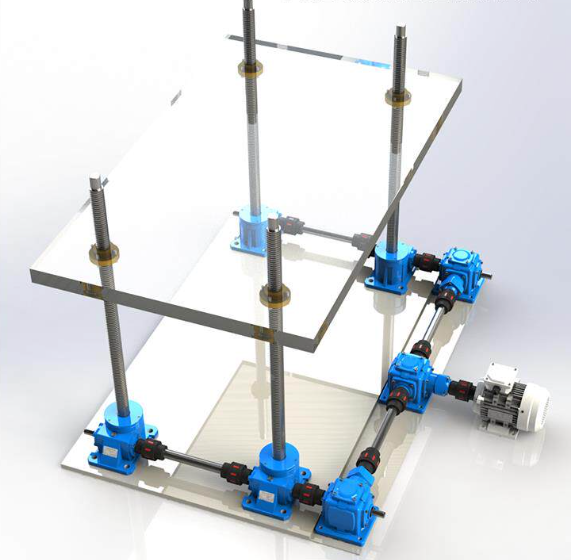
Installation Alignment
Ensure:
- The screw axis is collinear with the direction of load movement.
- The mounting base is perpendicular to the screw shaft.
- Couplings are properly aligned to avoid radial load.
Misalignment causes:
- Side loading
- Bending stress
- Increased bearing wear
- Higher operating temperature
- Reduced positioning accuracy
In multi-point synchronized systems, alignment must be verified across all units.
Bolt and Fastener Re-Torque Schedule
After installation:
- Re-tighten all foundation bolts and coupling bolts after 5 hours of operation.
- Repeat inspection at approximately 200 operating hours.
- Afterward, inspect annually or based on operating hours.
Thermal expansion and vibration can loosen fasteners during early operation. Early re-tightening prevents structural movement.
3. Routine Inspection Schedule
Maintenance planning should reflect:
- Operating frequency
- Load conditions
- Environmental factors
A common industrial schedule includes:
- Weekly visual checks
- Monthly technical inspection
- Annual preventive maintenance
Weekly Visual & Acoustic Inspection
Inspect for:
- Oil leakage
- Grease splatter
- Surface scoring on the screw
- Excessive dirt accumulation
Listen for:
- Abnormal noise
- Gear whining
- Jerking motion
- Increased vibration
Sound changes often indicate early wear or lubrication issues.
Monthly Technical Inspection
Gear Backlash
- Check for increased backlash in bevel gears.
- If excessive, adjust shims per technical manual.
- Replace worn gears or bearings when necessary.
Axial Play (End Float)
- Measure axial movement at screw end.
- Increased play may indicate nut or bearing wear.
Early detection prevents costly downtime.
Annual Maintenance
- Clean screw shaft and protective covers (bellows, telescopic guards).
- Remove abrasive contaminants such as metal chips and dust.
- Reapply fresh lubrication.
- Inspect oil seals and replace aged or cracked components.
Preventive maintenance significantly extends system lifespan.
4. Environmental and Storage Considerations
Environmental exposure directly impacts performance.
Operating Environment
Avoid long-term exposure to:
- Heavy dust
- Abrasive particles
- Corrosive gases
- Splashing liquids
Where necessary, install:
- Dust covers
- Bellows protection
- Telescopic guards
These components prevent contamination from entering the ball nut and gearbox.
Long-Term Storage
If stored for extended periods:
- Keep in dry, dust-free conditions.
- Rotate input shaft periodically to redistribute lubricant.
- Prevent grease settling and oil seal hardening.
- Support the screw horizontally to prevent long-term bending under self-weight.
Proper storage protects internal components from corrosion and deformation.
5. Operation and Load Management
Operational discipline directly influences service life.
Break-In Period for New Equipment
After installation or overhaul:
- Run under moderate load for 20–30 hours.
- Gradually increase to rated load.
This controlled break-in:
- Allows gear tooth surfaces to seat properly
- Stabilizes operating temperature
- Improves long-term durability
Avoid Overtravel and Overload
Never:
- Exceed maximum stroke length
- Force the screw against mechanical limits
- Operate beyond rated load capacity
Overtravel may damage:
- Ball nut
- Limit mechanisms
- Bearings
Safety Nut Inspection
If equipped with a safety nut:
- Periodically check clearance between main nut and safety nut.
- Monitor wear gap per manufacturer guidelines.
The safety nut is a critical secondary protection device in vertical lifting systems.
Why Proper Maintenance Matters
A well-maintained bevel gear ball screw jack provides:
- Stable synchronization in multi-point lifting
- Consistent positioning accuracy
- Reduced downtime
- Lower lifecycle cost
- Improved safety
Neglected maintenance leads to:
- Backlash increase
- Efficiency loss
- Heat buildup
- Premature component failure
Industrial lifting systems are long-term capital investments. Preventive care protects both performance and safety.
Frequently Asked Questions (FAQ)
1. How often should I lubricate the ball screw?
Under normal conditions, every 200–600 operating hours. Shorten intervals in dusty or heavy-load environments.
2. Is gearbox oil replacement always necessary?
Not always. Many systems are long-life lubricated. However, high-duty applications should follow a scheduled oil change.
3. What are signs of misalignment?
- Increased operating noise
- Uneven wear
- Temperature rise
- Reduced positioning accuracy
4. Can over-greasing damage the system?
Yes. Excess grease can trap contaminants and increase internal resistance.
5. How do I know if the ball nut is worn?
Check for increased axial play, positioning error, or abnormal vibration.
6. Does NUODUN provide maintenance guidance for OEM systems?
Yes. NUODUN provides technical documentation, installation support, and maintenance recommendations tailored to specific project requirements.
Conclusion: Maintenance Is Performance Insurance
A bevel gear ball screw jack is engineered for high-speed, high-precision, and frequent lifting applications. Its advanced structure offers significant performance advantages—but only when properly maintained.
By ensuring:
- Correct lubrication
- Accurate alignment
- Routine inspection
- Environmental protection
- Controlled load operation
You safeguard system precision, durability, and operational safety.
Contact NUODUN for Professional Transmission Solutions
NUODUN is a professional transmission equipment manufacturer specializing in:
- Bevel gear ball screw jacks
- Multi-point synchronized lifting systems
- Custom stroke and load configurations
- OEM-supported transmission solutions
If you require technical guidance, customized specifications, or long-term maintenance support, our engineering team is ready to assist.
Contact NUODUN today to discuss your application and ensure your lifting system operates at peak performance for years to come.